ABOUT
About this spot
Kameido Tenjin Shrine is a Tenmangu shrine in Kameido, Koto Ward, Tokyo. It enshrines Sugawara no Michizane (Tenjin) and Ame-no-Hohi-no-Mikoto, and is loved as a god of learning. Its buildings, bridges and pond were made on the model of Dazaifu Tenmangu.
According to the shrine's tradition, a Dazaifu priest named Sugawara Otori Nobusuke, a descendant of Michizane, enshrined a statue of Michizane here in 1661. The next year the shrine buildings, bridges and pond were laid out on the model of Dazaifu Tenmangu. During the reconstruction after the Great Fire of Meireki (1657), the fourth shogun, Tokugawa Ietsuna, is said to have donated the present shrine land to serve as the guardian shrine of the area. The shrine was renamed Kameido Shrine in 1873 and took its present name in 1936. In the flood of 1910 (Meiji 43), the grounds were submerged.
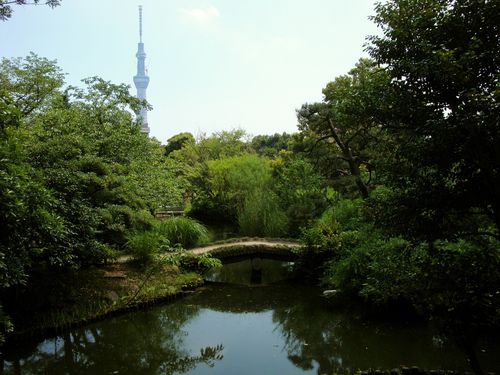
The heart of the grounds is the Shinji Pond, which is crossed by three bridges: Otoko-bashi, Taira-bashi and Onna-bashi. They are said to stand for the past, the present and the future, and the design lets you cross them to purify yourself before approaching the shrine. Otoko-bashi and Onna-bashi are arched drum bridges. The view of wisteria trellises beside the drum bridge has been a famous spot since the Edo period and was drawn by Utagawa Hiroshige as No. 57, "Kameido Tenjin Keidai", in his "One Hundred Famous Views of Edo". From the top of the drum bridge you can look down over the whole wisteria trellis. The series was produced between 1856 and 1858 (Ansei 3 to 5). The print shows a mother and child nervously stepping down the bridge, a calm scene.
The shrine is called "Tokyo's best wisteria spot", and a wisteria festival is held every year from late April to early May. It is also known for plum blossoms: at the plum festival held around February and March each year, more than 300 plum trees bloom. In late January the "Uso-kae" ritual is held, in which carved wooden uso birds are exchanged to wish for good fortune, and chrysanthemum displays are shown in autumn.
The grounds include auxiliary shrines such as Mitake, Hanazono, Benten, Kobaiden and Shingyuden. Mitake Shrine is known as the "god of the hare", Hanazono Shrine enshrines Michizane's wife and children, and Kobaiden enshrines a seedling of the "flying plum", the sacred tree of Dazaifu Tenmangu. A statue of a sacred ox is said to cure illness and grant wisdom when touched; the ox is revered as a messenger of Tenjin, a fitting sight at a shrine of learning. The timing and content of events can change, so please check official information before you visit.
Sources
This article was written from the official, municipal and tourism-association sources above, and checked against them separately from the writing. Editorial policy
Last updated November 12, 2026