ABOUT
About this spot
Ishibutai Kofun is an ancient burial mound in Shimanosho, Asuka Village, Takaichi District, Nara Prefecture, designated a Special Historic Site. It lies in the Ishibutai area of Asuka Historical National Government Park. Its defining feature is that the earthen mound has been lost, leaving the stone chamber of huge granite blocks exposed.
The burial chamber is a double-sleeved horizontal stone chamber that opens to the southwest. It is built entirely of granite, with about 30 stones stacked to a total weight estimated at 2,300 tons. The main chamber is about 7.7 meters long, 3.5 meters wide and 4.7 meters high, and the passage leading to it is about 11 meters long. The stones are said to have been carried from the foot of Tonomine, about 3 kilometers upstream along the Fuyuno River that runs beside the tomb.
Around the chamber ran a dry moat lined with facing stones, with an outer embankment beyond it. The original shape of the mound is not settled, and theories include a square mound and a round-on-square mound. The area around the tomb has been laid out as a lawn park that takes advantage of the terraced-field terrain.
The most widely held theory is that the person buried here was Soga no Umako. The Nihon Shoki entry for May of the 34th year of Empress Suiko (626) records that the "minister" (oomi) died and was buried in the Momohara tomb. Since Kita Sadakichi proposed in the Meiji era that this minister was Umako and the tomb was Ishibutai, the view has become influential. It has not been definitively confirmed, however. Almost all the burial goods had been looted from the chamber, leaving only fragments of a stone coffin. Another theory suggests that stripping the earth and exposing the tomb was a punishment of the Soga clan.
As for the name, the Yamato Meisho-ki of the Edo period records a tomb called "Ishi-daya," and some think this changed into "Ishibutai." The story that a fox disguised as a woman danced on the stone and gave it its name is said to be a recent invention.
Academic excavations were carried out in 1933 and 1935, led by Hamada Kosaku and others of Kyoto Imperial University. They found the line of facing stones, the dry moat and the outer embankment, showing that the mound was square. It was the first time a moat around a burial mound had been confirmed by excavation. The tomb was designated a Special Historic Site in March 1952, and restoration work took place from 1954 to 1959, during which a prefectural road passing over the moat's course was rerouted. The appearance of the boulders has not changed since the Edo period, but the chamber and passage had badly collapsed and were repaired, and visitors can now enter the chamber.
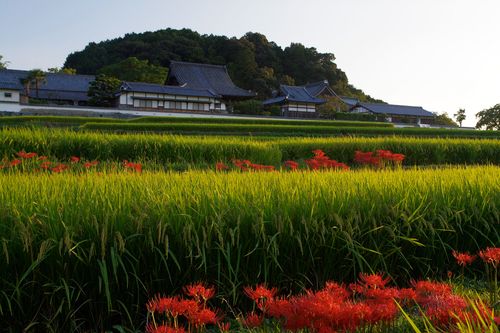
Nearby attractions include Okadera Temple and the Inabuchi terraced rice fields. Opening hours and entry arrangements can change, so check the park's official guidance before you visit.
Sources
This article was written from the official, municipal and tourism-association sources above, and checked against them separately from the writing. Editorial policy
Last updated November 12, 2026