ABOUT
About this spot
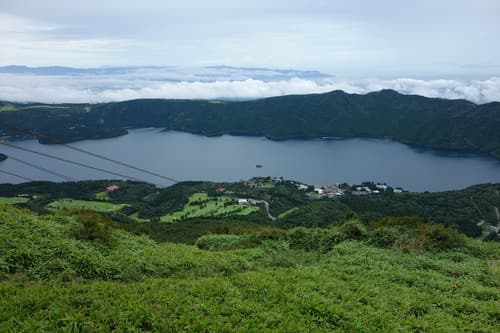
Lake Ashi is a caldera lake in Hakone, Ashigarashimo District, Kanagawa Prefecture, lying on the southwestern side of the Hakone volcano's caldera. It is said to have formed about 3,100 years ago when a landslide from Mount Kami dammed the Haya River. It covers about 7.03 square kilometers, is about 21.1 km around, has a maximum depth of about 43.5 m and a mean depth of about 15.0 m, and its surface is about 723 m above sea level. It is a freshwater lake, and seepage from the lakebed is said to supply about 60 percent of its inflow.
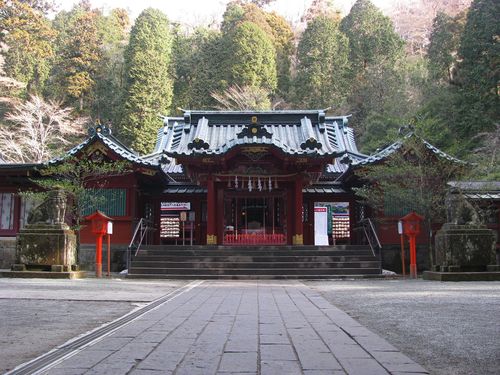
Several stories overlap here. According to legend, the founder of Hakone Shrine subdued a nine-headed dragon living in the lake. In 1670, in the Edo period, the Fukaura Irrigation channel was completed and lake water was also drawn toward Susono in Shizuoka. Hakone sits on the old Tokaido road, so the lakeshore's history goes along with the highway. Boat service on the lake began in 1911, and black bass were released in 1925.
The signature view of Lake Ashi is the Peace Torii gate of Hakone Shrine standing on the shore and the lake beyond it. The red torii seen from the water, with the mountains behind it, makes a typical Hakone picture. On a clear day you can see Mount Fuji across the lake. Onshi Hakone Park, once the Hakone Imperial Villa, is open to the public and lets you view the lake through the trees.
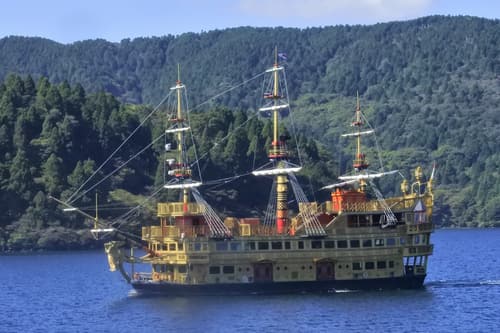
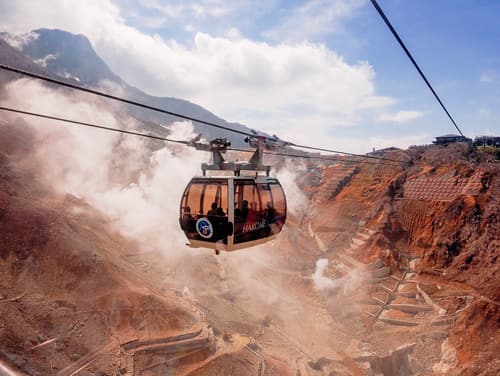
On the water, the pleasure is the sightseeing boat. Boats styled as pirate ships link the ports of Togendai, Moto-Hakone and Hakone-machi, and the trip between Togendai and Moto-Hakone or Hakone-machi takes about 25 to 40 minutes. From the deck you can see the torii, the lakeside forest and, on a clear day, Mount Fuji from different angles. From Togendai you can transfer to the Hakone Ropeway toward Sounzan.
Lake Ashi is also known as a fishing spot, where rainbow trout and largemouth bass are enjoyed by anglers. Local specialties include tempura of smelt and trout. It is also the turnaround point of the Hakone Ekiden relay race, a New Year tradition.
The best time of day is morning, when the air is clear and Mount Fuji is easier to see and the lake is calm. Good seasons are early summer with fresh green and autumn when the mountains change color. Allow half a day to a full day for the boat, the torii, a lakeside walk and a meal. Strong wind, bad weather or inspection can suspend the boats, so please check the operator's official website before you visit.
Sources
This article was written from the official, municipal and tourism-association sources above, and checked against them separately from the writing. Editorial policy
Last updated November 21, 2026