ABOUT
About this spot
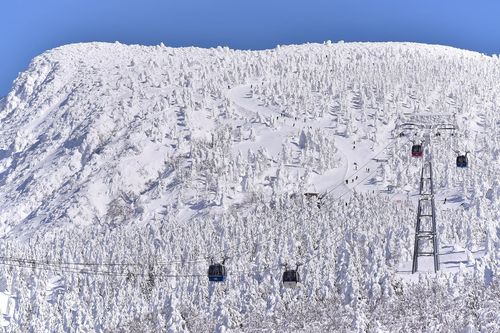
The Zao Ropeway is at Zao Onsen in Yamagata City, Yamagata Prefecture. It has two sections: the base line from Zao Sanroku Station to Juhyo-kogen Station, and the summit line from Juhyo-kogen Station to Zao Jizo-sancho Station. Together they climb about 800 meters, from 855 meters at the base to 1,661 meters at Jizo-sancho. The summit line takes about ten minutes.
The base line opened on October 1, 1962. On the summit line, a Funitel system was introduced in December 2003, the first of its kind in a Japanese ski resort. Juhyo-kogen Station, at 1,331 meters, is where the two lines connect. The operator's website describes the ropeway as offering a 360-degree panorama in comfort and safety.
The greatest attraction is the winter snow monsters, or juhyo. Zao's juhyo form as snow and ice build up on conifers until they look like white monsters. In winter many people come for them, and the ropeway serves as the way to see them. The weather near the summit changes easily, so please dress warmly. The juhyo are at their best from January to March, and on some nights from late December to February the trees are lit up.
From spring to autumn it is a good season for highland trekking. In summer the appeal lies in Zao's flowers, and in autumn the foliage views. At Jizo-sancho Station there is a "bell of good fortune," and at 1,661 meters it is a good place to take a breath.
The best times are the juhyo season in winter and the greenery and foliage of summer and autumn. Mountain weather changes quickly, and going up in the morning is said to give you better visibility. The ropeway can stop for preparation periods or strong wind, so please check the official website before you go.
Allow about two hours for the rides and a stroll at the top. Zao Onsen at the foot of the mountain is a long-known hot spring town, and soaking after you come down is a pleasure. It adjoins the Zao Onsen ski area, so it is busy with skiers in winter.
Sources
This article was written from the official, municipal and tourism-association sources above, and checked against them separately from the writing. Editorial policy
Last updated November 21, 2026