SPOT

Arashiyama Monkey Park Iwatayama

Arashiyama Monkey Park Iwatayama is a wild monkey park halfway up Mount Iwatayama in Nishikyo Ward, Kyoto. Visitors can watch about 120 provisioned Japanese macaques up close and look out over the city of Kyoto from the rest area, 160 meters above sea level.

KyotoKyoto

35.01°N 135.67°E

ABOUT

About this spot

Within walking distance of Togetsukyo Bridge in Arashiyama, this monkey park is home to about 120 Japanese macaques. It stands partway up Mount Iwata, a side peak of Arashiyama, at an elevation of 160 m, and you can watch the monkeys at close range as they move freely around the grounds.

Its history begins just after the war. In 1954 the owner of a long-established inn near Togetsukyo Bridge, inspired by the efforts at Mount Takasaki in Beppu, Oita, planned a wild monkey park in Arashiyama. At the first meeting in July that year, attended by Denzaburo Miyadi and others representing Kyoto University's primatology group, the survey and feeding of the monkeys were entrusted to the group's Naonosuke Mano. Then, on December 24, 1955, they succeeded in leading the troop to the main feeding ground on Mount Iwatayama. The opening ceremony was held on March 17, 1957, and in 1975 the city of Kyoto bought Mount Iwatayama.

This is a tourist site, but also a place of research for Japanese primatology. The troop's split into Group A and Group B in June 1966 is also on record. The Muromachi-period kyogen play Sarumuko is said to be modeled on the wild monkeys of Arashiyama, which means the link between Arashiyama and monkeys goes back long before it became a tourist destination.

The entrance (ticket booth) is beside the grounds of Ichitani Munakata Shrine. From the entrance to the monkeys' area halfway up the mountain, about 120 steps and an uphill path take about 20 minutes on foot, a bit like a forest walk. From the rest area you can look out over the city of Kyoto, enjoying the view together with the monkeys.

The monkeys groom one another leisurely and lie in the sun, behaving just as wild animals do. They are wild animals, so do not touch them carelessly and observe them following the instructions on site.

The best seasons are spring and autumn, when temperatures are mild. Combined with Arashiyama's autumn foliage season, the slope is pleasant to walk. Because it is a mountain path, wear comfortable walking shoes.

It fits easily into a trip to Arashiyama and can be combined with the area around Togetsukyo Bridge, the bamboo grove and a walk in Sagano for half a day. Access is good, about 7 minutes on foot from Hankyu Arashiyama Station.

Sources

  1. ja.wikipedia.org
  2. sp.jorudan.co.jp

This article was written from the official, municipal and tourism-association sources above, and checked against them separately from the writing. Editorial policy

Last updated November 19, 2026
Share this spot

NEARBY

Nearby recommendations

More places worth visiting in the area.

Kyoto, Kyoto

Tenryu-ji Temple

Tenryu-ji is the head temple of the Tenryu-ji school of Rinzai Zen in Arashiyama, Kyoto. Its pond garden by Muso Soseki is a Special Place of Scenic Beauty, and the temple is a UNESCO World Heritage Site.

Kyoto City, Kyoto

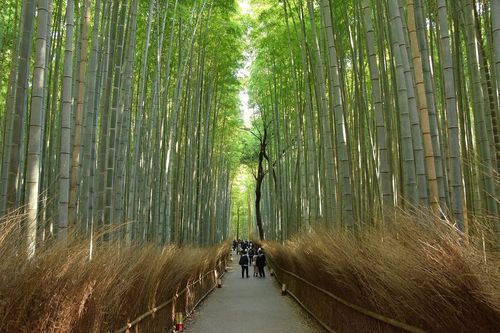
Arashiyama Bamboo Grove

A fantastical walking path symbolizing Arashiyama, lined with tens of thousands of bamboo stalks that cover the sky. Surrounded by the sound of bamboo swaying in the wind, you can spend a tranquil moment.

Kyoto, Kyoto

Matsunoo Taisha

Matsunoo Taisha is a shrine at the foot of Mt. Matsuo in Nishikyo-ku, Kyoto. It enshrines Oyamakui no Kami and Nakatsushimahime no Mikoto, and is known as an old shrine of the Hata clan and as the god of sake brewing. Its main hall (rebuilt in the Muromachi period) is an Important Cultural Property, and it has the Shofu-en garden.

Kyoto, Kyoto

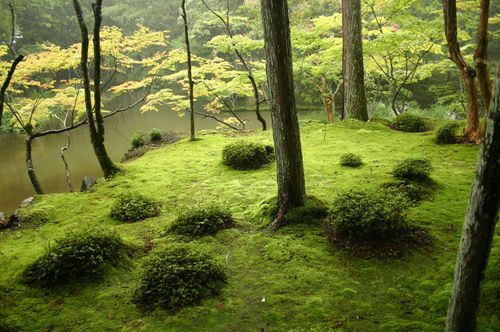
Saihoji Temple (Moss Temple)

Saihoji is a Rinzai-style temple in Nishikyo Ward, Kyoto, popularly called Kokedera, the Moss Temple, for its garden carpeted with roughly 120 kinds of moss. The garden, linked to Muso Soseki, is part of a UNESCO World Heritage Site.

Kyoto, Kyoto

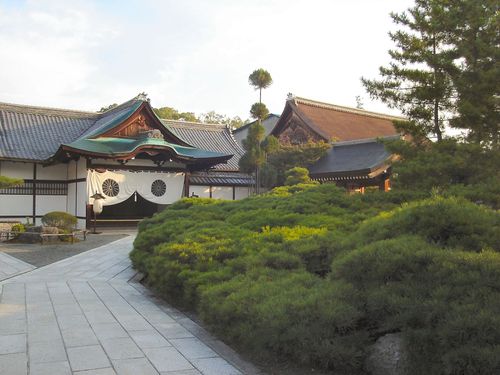
Daikaku-ji Temple

Daikaku-ji is the head temple of the Shingon Daikakuji school in Saga, Ukyo Ward, Kyoto. Built on the site of Emperor Saga's detached palace, this monzeki temple is known for Osawa Pond, a National Place of Scenic Beauty, and for the Shinden and Shoshinden halls linked to Retired Emperor Go-Uda.

Kyoto, Kyoto

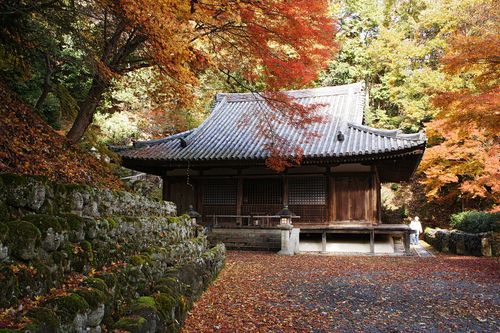
Otagi Nenbutsu-ji

Otagi Nenbutsu-ji is a Tendai temple in Saga-Toriimoto, Ukyo-ku, Kyoto. It is known for its "1,200 Rakan" stone figures carved by visitors and for its main hall, an Important Cultural Property, and it is the starting point of the Sagano walk.

AREA

Explore the area

More places in the same city, the same category, and close by.

NEARBY

Festivals and breweries in Kyoto

Festivals and brewery visits on our sister sites, in the same city as this spot.

MORE TO EXPLORE

More from Kyoto

Discover more of the same region on our sister sites.