ABOUT
About this spot
At the eastern foot of Mt. Matsuo, which rises south of Arashiyama on the west side of the Kyoto basin, stands an old shrine with cypress-bark-roofed halls. Matsunoo Taisha enshrines Oyamakui no Kami and Nakatsushimahime no Mikoto, and its grounds cover about 120,000 tsubo. It began with the worship of a sacred rock (iwakura) near the mountain summit as the dwelling of a deity; behind the halls spreads an evergreen broadleaf forest, and the habitat of Kagikazura is a natural monument of Kyoto City. As you walk the approach, the mountain seems to press close around you.
According to shrine tradition, in 701 Hata no Imiki Tori of the Hata clan, a family of continental descent, built the halls on the present site by imperial order and moved the deity here. In the Heian period it was listed in the Engishiki as a Myojin Taisha and was held in high esteem by the court as one of the Twenty-Two Shrines. In the Kamakura period Minamoto no Yoritomo visited and offered gold and sacred horses, and in the Edo period the shogunate recognized its land with a red-seal grant. It became a Kanpei Taisha in 1871 and took its present name, Matsunoo Taisha, in 1950.
The shrine is best known for its worship as the god of sake brewing. It is said that the water of the sacred spring "Kame-no-i," which wells up behind the halls, keeps sake from spoiling when mixed in, and brewers still carry the water home. Sake barrels offered from around the country are stacked high in the portable-shrine storehouse, and in the grounds you can see the "lucky stroking turtle" and the "lucky pair of carp," named for the turtle and carp that serve as the deity's messengers.
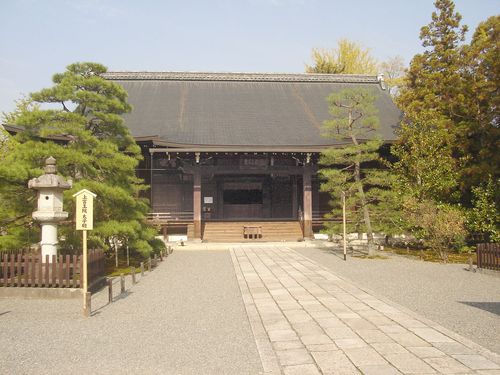
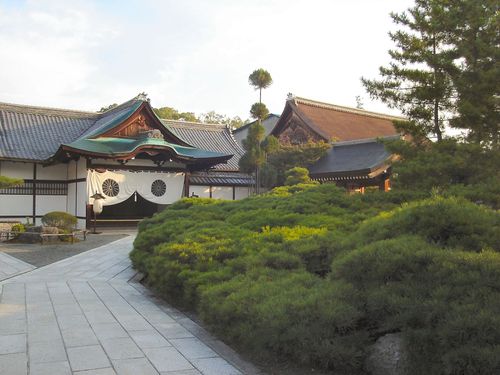
The main hall is the chief highlight among the buildings. Rebuilt in the Muromachi period, with the main work being a renovation in 1542, it is a cypress-bark-roofed "ryonagare-zukuri" (also called "Matsuo-zukuri") with front and back roofs of equal length, and it is an Important Cultural Property. The two-story gate, raised in 1667, stands about 11 meters tall, and the Shinzokan houses Important Cultural Properties such as wooden deity statues from the Heian period. The garden Shofu-en, completed in 1975, was created by Shigemori Mirei and others; besides the "Joko no Niwa," "Kyokusui no Niwa" and "Sokkyo no Niwa," it has the "Horai no Niwa" by Shigemori Kanto. The stones used are chlorite schist from Tokushima Prefecture.
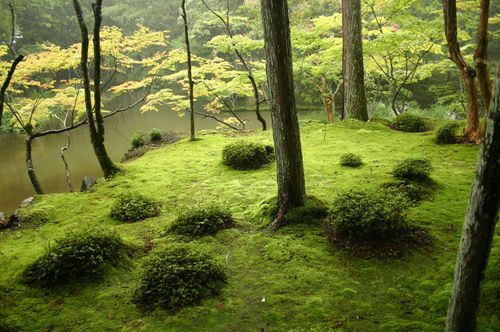
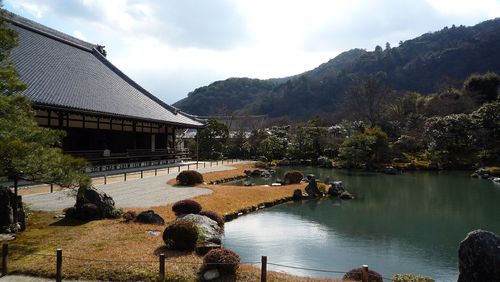
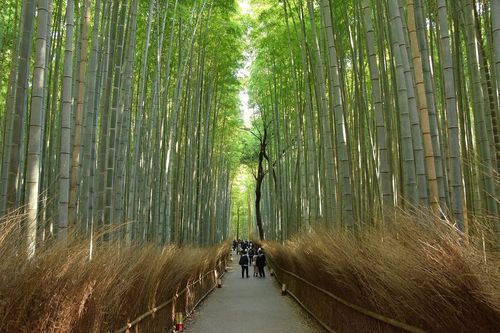
From April into May, an estimated 3,000 yamabuki (Japanese kerria) bushes color the grounds, and the Yamabuki Festival is held. The Matsuo Festival takes place with the Shinko-sai on the first Sunday after April 20 and the Kanko-sai three weeks later, with a boat procession among other events. On the first Day of the Hare in November, the Jobo-sai prays for safe brewing. Nearby are Saiho-ji, known for its moss garden, Tenryu-ji and the Bamboo Grove Path of Arashiyama, and since the shrine is a few minutes' walk from Hankyu Matsuo-taisha Station, it is easy to combine with a stroll in Arashiyama.
Sources
This article was written from the official, municipal and tourism-association sources above, and checked against them separately from the writing. Editorial policy
Last updated November 15, 2026