ABOUT
About this spot
At the foot of the mountain in Saga-Toriimoto, where the approach to Mount Atago begins, stands a temple whose slopes are filled with rows of moss-covered stone rakan (arhat) figures. Otagi Nenbutsu-ji, with the mountain name Tokakusan, belongs to the Tendai school, and its principal image is a Thousand-Armed Kannon who wards off misfortune. About 1,200 stone rakan stand in the grounds, each with a different face and posture, which is why the temple is called the "Temple of the 1,200 Rakan." It is also the starting point of the walk through Sagano, and many visitors head downhill from here toward Arashiyama.
According to temple tradition, Empress Shotoku founded it in 766 as Atago-dera on a site corresponding to present-day Matsubara-dori in Higashiyama-ku, and the name is said to come from its being the first temple built in Atago District of Yamashiro Province. It later fell into ruin and lost its halls to a Kamo River flood, but Senkan Naigu of the Tendai school revived it on the order of Emperor Daigo. He was called the "Nenbutsu Shonin" because he chanted the nenbutsu, and the temple is said to have been renamed Atago Nenbutsu-ji after him. The main hall was moved to its present site in 1922, but the temple had no resident priest during the war, and in 1950 Typhoon Jane caused heavy damage and it was abandoned.
The temple was revived by Nishimura Kocho, a monk who was also a sculptor of Buddhist images. In 1955 he was ordered by Enryaku-ji to take charge and, encouraged by Onishi Ryokei of Kiyomizu-dera, kept working on the grounds. In 1980 the dismantling and repair of the Niomon gate began, and from the following year ordinary visitors learned the basics of stone carving and carved rakan themselves in the "Showa rakan carving" project. The original plan was 500 figures in five years, but that goal was reached in about one year, and another 700 were added, reaching 1,200 in around ten years. The later figures are somewhat smaller to make good use of the space in the grounds.
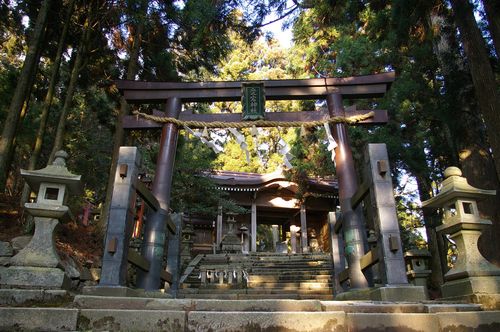
The rakan are naturally the main attraction. Some are deep in prayer, some laugh out loud, and some hold animals, cameras or cassette players, showing the feelings and lives of the people who carved them, so it is easy to lose track of time looking at them one by one. Among the buildings, the main hall, said to have been rebuilt in the mid-Kamakura period, stands at the back as an Important Cultural Property, and the seated statue of Senkan Naigu is also an Important Cultural Property. The Niomon gate, built in the mid-Edo period, holds two Kamakura-period Kongo Rikishi statues designated by Kyoto City. There are also the Tahoto pagoda enshrining a stone Shaka Nyorai, the Jizo-do dedicated to the fire-protecting Jizo, and the Fureai Kannon-do, which doubles as an ema hall and holds a Kannon that visitors may stroke.
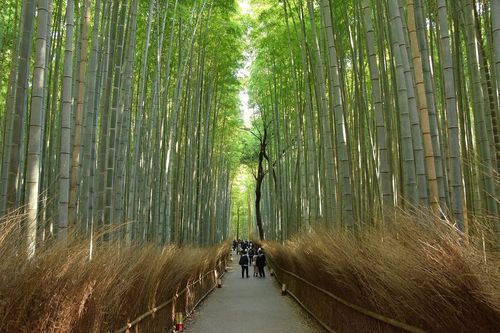
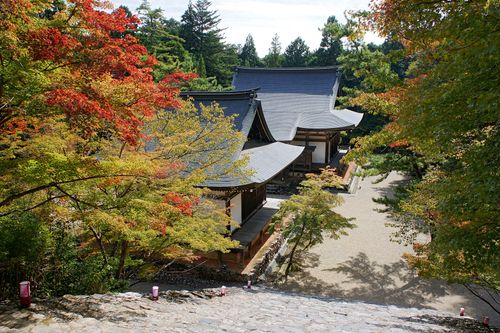
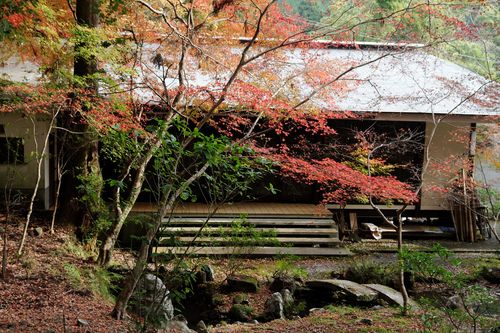
Autumn, when the surrounding maples turn color, and the fresh green of spring are especially beautiful for the contrast between moss and trees. The grounds lie on a mountain slope, so comfortable shoes are a good idea. It is right by the Atagoji-mae bus stop of Kyoto Bus, but buses run only about once an hour during the day. If the timing works, you can walk downhill toward Arashiyama and continue to the Bamboo Grove Path of Sagano and Togetsukyo Bridge and link the sights of Arashiyama into one tour.
Sources
This article was written from the official, municipal and tourism-association sources above, and checked against them separately from the writing. Editorial policy
Last updated November 16, 2026