ABOUT
About this spot
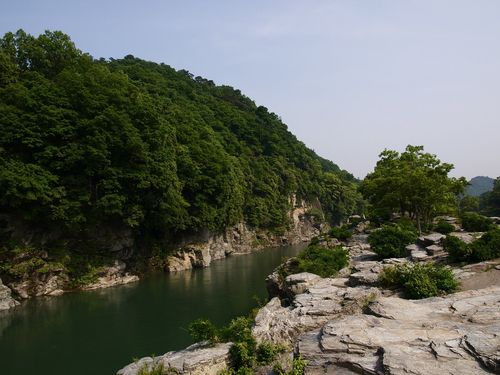
Hachigata Castle is the ruin of a Sengoku-period castle in Yorii, Saitama Prefecture. A hirayamajiro, a castle on a low hill, it was built on a cliff between the Arakawa River and its tributary, the Fukasawa River, and the river and the cliff made it a natural stronghold. Its main enclosure, second and third enclosures, the Chichibu and Suwa enclosures and others form a linear layout, and today the site is maintained as Hachigata Castle Park.
The castle is said to have been built in 1476 (Bunmei 8) by Nagao Kageharu. In 1478, after Ota Dokan attacked, Uesugi Akisada entered the castle. Hojo Ujikuni, the fourth son of Hojo Ujiyasu, later became lord, and the castle served as a base for Hojo rule over northern Kanto, reportedly undergoing large-scale renovation. The year Ujikuni entered the castle is disputed. In 1569 Takeda Shingen attacked, and in 1574 Uesugi Kenshin set fire to the castle town.
The biggest event was Toyotomi Hideyoshi's attack on Odawara in 1590 (Tensho 18). Hachigata Castle was surrounded by allied forces made up of Maeda Toshiie, Uesugi Kagekatsu, Sanada Masayuki and commanders serving under Tokugawa Ieyasu, and surrendered after holding out for about a month. It is said that Ujikuni handed over the castle on condition that the lives of the garrison be spared.
The ruins retain earthworks, moats, earthen bridges and stone walls. Based on excavations, stone-faced earthen ramparts, a four-legged gate, earthen walls, a wooden bridge and a pond have been restored, so visitors can walk the site imagining how the castle once looked. The site was designated a national historic site in 1932 (Showa 7), and preservation work by the town of Yorii began in 1984. In 2006 it was selected as number 18 of Japan's Top 100 Castles.
At the Hachigata Castle History Museum in the park, visitors can learn about the castle's history and structure through video, dioramas and other displays. The grounds include a colony of dogtooth violets and an Edo higan cherry tree designated a natural monument of Yorii Town, which was named Ujikuni-zakura in 2018. The scenery can be enjoyed in each season.
The site is large, so it helps to get the overall picture at the museum first, then walk to the reconstructed gate, the stone-faced ramparts and the cliff facing the Arakawa River, where the meaning of the terrain becomes clear. A location surrounded by cliffs and river is a place where the strength of its defense is felt only by standing there. Opening days and events can change, so please check Yorii Town's official information before visiting.
Sources
This article was written from the official, municipal and tourism-association sources above, and checked against them separately from the writing. Editorial policy
Last updated October 29, 2026