ABOUT
About this spot
The Saitobaru Burial Mounds spread across the Saitobaru plateau in Saito, Miyazaki Prefecture, and are regarded as one of the largest groups of kofun in Japan. On a plateau of diluvial deposits about 70 meters above sea level, more than 300 raised tombs, including keyhole-shaped, round, and square mounds, are scattered. The group became a national historic site in 1934 and was designated a Special Historic Site in 1952. Construction continued through the Kofun period, until about the first half of the 7th century. Because the broad, undulating plateau survives together with the mounds, it is a place where you can imagine the landscape of the Kofun period as you walk.
At the heart of the group are Osahozuka and Mesahozuka. Osahozuka is said to be the largest scallop-shaped tomb in Japan, and Mesahozuka the largest keyhole-shaped tomb in Kyushu. Both are managed by the Imperial Household Agency as tomb reference sites and are not included in the designated area of the Special Historic Site. Access is restricted, so they are viewed from outside.
Among the others, Himezuka (Mound 202) is a keyhole-shaped mound 50.2 meters long with a surrounding moat, thought to date from the early 6th century. Onoiwaya Kofun (Mound 206) is the only mound in the group with a horizontal stone burial chamber. Because the chamber was in danger of collapse, it was dismantled and restored, and the excavation carried out at that time confirmed an underground drain, an earthen bank running all the way around the mound, and later additional burials.
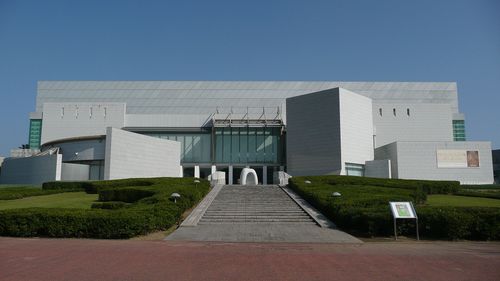
Saitobaru is also deeply tied to the history of Japanese archaeology. Between 1912 and 1917 the first full-scale academic survey in Japan is said to have been carried out here, with excavations proceeding in six rounds. In 1914 the Miyazaki Prefectural Historic Sites Research Institute was set up to house the finds, and this is linked to today's Miyazaki Prefectural Saitobaru Archaeological Museum. From 1966 to 1968 the area was developed as the first Fudoki-no-Oka (Fudoki Hill) park.
At the present Miyazaki Prefectural Saitobaru Archaeological Museum, the finds are kept and exhibited. If you stop there before walking around the mounds, the background of what you will see becomes easier to understand. The access restrictions at Osahozuka and Mesahozuka and the opening status of each facility may change, so please check official information from the museum or Saito City before visiting.
Sources
This article was written from the official, municipal and tourism-association sources above, and checked against them separately from the writing. Editorial policy
Last updated November 12, 2026