ABOUT
About this spot
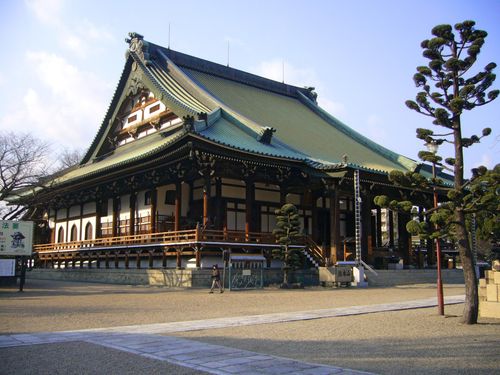
In the southern part of Osaka, set among residential streets, is a head temple of the Shingon Sennyu-ji school. Its formal name is Shikinzan Komatsu-in Horaku-ji, and its main image is Fudo Myoo. Locally it is affectionately known as "Tanabe no O-Fudo-san," and fairs are held every month. Its easygoing quality makes this a temple close to everyday life.
The temple is said to have begun in 1178, founded by Taira no Shigemori. It is described as built in the spirit of "onshin byodo" (treating friend and foe alike), to mourn the war dead of both the Minamoto and Taira clans without distinction. It also enshrines a Nyoirin Kannon said to have been the personal devotional image of a Minamoto warrior. In 1571 the halls were lost to fire in Oda Nobunaga's campaign, and in 1711 the monk Kozen Fusetsu entered the temple and restored it as a Ritsu-school temple. Buildings moved from the residence of the Oda clan of Uda-Matsuyama Domain in Yamato Province still stand as the temple's gate and main hall.
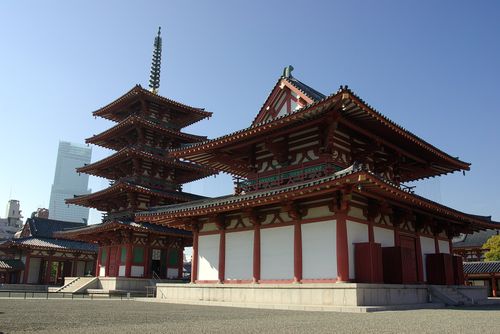
The temple is also associated with the Edo-period eminent monk Jiun Sonja, who is said to have taken the tonsure here at the age of 13. The grounds contain the main hall, the Daishi-do, a three-story pagoda completed in 1996, a bell tower, the Mizukake Fudo and the main gate.
Among its cultural properties are the Important Cultural Property "Fudo Myoo and Two Attendants" (color on silk) and the Osaka Prefecture-designated bronze standing statue of Zao Gongen. Beside the three-story pagoda stands the "Horaku-ji Camphor Tree," a natural monument designated by Osaka Prefecture in 1981, 26 meters tall with a trunk circumference of 8 meters. It is an imposing tree that invites you to look up after worshipping.
The grounds also hold the Kosaka Kiseki Memorial Hall, which houses works by the calligrapher Kosaka Kiseki, a recipient of the Japan Art Academy Prize. The temple is also counted as a station on several pilgrimage circuits, including No. 3 of the Kinki 36 Fudo Sanctuaries and No. 1 of the Osaka 13 Buddhas pilgrimage, and a Shikoku 88-temple "sand-stepping" rite is also held.
Recommended days are the Tanabe Fudo festival day on the 28th of each month and the Kobo Daishi festival day on the 21st. Grand festivals are held in January, May and September, and the Shikoku 88-temple "sand-stepping" rite takes place on October 21. If you only want to enjoy the calm atmosphere, allow 30 minutes to an hour.
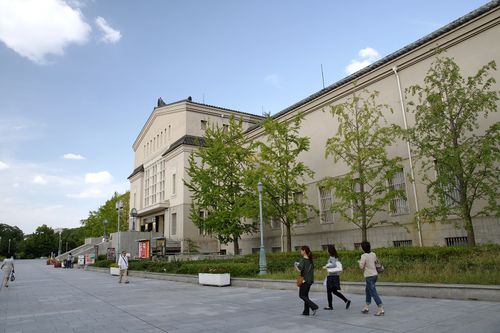
It is about a 5-minute walk from Minami-Tanabe Station on the JR Hanwa Line and within walking distance of Tanabe Station on the Osaka Metro Tanimachi Line. Osaka has sights such as Abeno Harukas, Dainenbutsu-ji and the Osaka City Museum of Fine Arts, so the temple fits easily into an Osaka itinerary as a stop in between.
Sources
This article was written from the official, municipal and tourism-association sources above, and checked against them separately from the writing. Editorial policy
Last updated November 16, 2026