ABOUT
About this spot
Lake Shinji lies across Matsue and Izumo in Shimane Prefecture and forms part of the Hii River system. It is one of the lagoon lakes formed when a shallow sea was cut off from the open sea by sediment. Roughly a long rectangle running east to west, it connects to the Sea of Japan from the Ohashi River at its eastern end through Nakaumi lake and the Sakai Channel. For this reason it is not a freshwater lake but a brackish one, where seawater and fresh water mix, and its average salinity is said to be about one tenth that of seawater. Lake Shinji and Nakaumi are among the few connected brackish lakes in Japan.
The best-known gift of this brackish lake is the yamato clam, and Lake Shinji is known as a major production area. Its seafood is rich in general: sea bass, morogo shrimp (Metapenaeus ensis), eel, amasagi (pond smelt), clams, carp and whitebait are called the Seven Treasures of Lake Shinji, and there is even a mnemonic, "Sumo-ashikoshi," made from their first syllables.
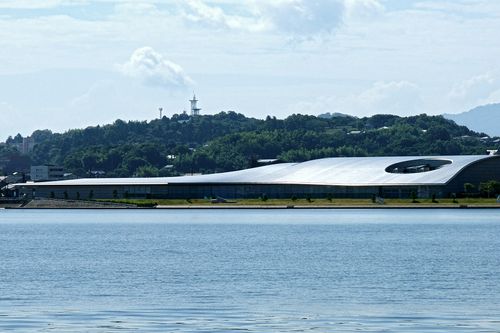
The lake is also important as a stopover for waterbirds, and many geese and ducks visit. In 2005 it became a nationally designated bird sanctuary, and in the same year it was registered under the Ramsar Convention together with neighboring Nakaumi. According to Shimane Prefecture, from late October to around March waterbirds such as tundra swans can be seen near the mouth of the Hii River, and in the early morning you can watch greater white-fronted geese take off. At Shinjiko Green Park on the west shore, you can observe wild birds through a telescope from the second-floor observation room while listening to explanations by resident staff, and next door is the Shimane Prefectural Lake Shinji Nature Museum Gobius.
Lake Shinji is famous for its sunsets. The only island in the lake is Yomegashima, and the sun setting behind its silhouette is regarded as the lake's emblematic view. The Lake Shinji Sunset Spot on the east shore, a place to enjoy the lake's sunset that was chosen as one of Japan's 100 Best Sunsets, has a walkway along the lake and a terrace where you can sit and watch the sunset. From here you can see the sun go down together with Yomegashima.
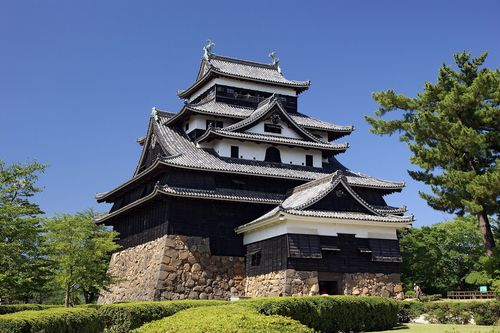
In 1951 Matsue City selected the Ten Views of Lake Shinji: snow at Matsue Castle, the evening bell of Tenrin-ji, Izumo Fuji seen from Aika, the moon at Ichibata-ji, autumn colors on Mount Atago in Hirata, evening ducks at the Shinji post town, spring haze over Tamatsukuri-nada, the afterglow at Yomegashima, the shrimp-fire lights off Shirakata and the morning mist at Ohashi. They capture the lake's expressions by season and time of day. The shrimp-fire (ebi-kagari) is a method of catching shrimp in the lake using bonfires. The keep of Matsue Castle stands about 500 meters north of the lake and is designated a National Treasure.
Around the lake are places suited to a stroll. On the east shore near central Matsue are Chidori-minami Park, where you can go down to a water's-edge embankment, Shirakata Park, known for its black pines and cherry trees, and Kishi Park in front of the Shimane Art Museum, which has monuments such as the Shinjiko rabbits. On the north shore, Shinjiko Fureai Park (Torigasaki) opens views of central Matsue and the northern hills, and ducks can be seen there from autumn to spring.
The lake also appears in the land-pulling myth in the Izumo-no-kuni Fudoki. In the myth a god named Yatsukamizuomitsuno-no-Mikoto pulled land from Silla and Oki to enlarge Izumo, and the Shimane Peninsula along the lake's north shore is said to be land pulled in at that time.
How the sunset looks and how the parks can be used change with the weather, the season and maintenance work, so please check information from the Matsue Tourism Association or similar sources before you visit.
Sources
This article was written from the official, municipal and tourism-association sources above, and checked against them separately from the writing. Editorial policy
Last updated November 12, 2026