ABOUT
About this spot
Koriyama Castle, also called Yoshida-Koriyama Castle, was a mountain castle in Yoshida, Akitakata City, Hiroshima Prefecture, and the base of the Sengoku-period daimyo Mori clan. It is a national Historic Site as "Mori Clan Castle Site: Koriyama Castle Ruins," and in 2006 it was also chosen as one of Japan's 100 Famous Castles.
The castle is said to have been built around 1336, when Mori Tokichika came to the Yoshida estate as steward, though the date of construction is not certain. Until Mori Motonari entered it in 1523 the castle is said to have changed little, and after that he extended the castle area over the whole mountain and fortified it. Motonari grew from the leader of the surrounding local lords into a Sengoku daimyo, and it is also told that he drove back a large army led by Amago Akihisa (later Amago Haruhisa).
When Hiroshima Castle neared completion around 1591, the Mori moved their base and Koriyama Castle ended its role. The period as the Mori residence is given as 256 years. It was later dismantled, prompted by measures such as the one-castle-per-province order. Today the ruins are a vast historic site, with the traces of many terraces built along the ridges spreading across the whole mountain.
The main enclosure stands on the summit. The walk from the car park at the foot of the mountain to the main enclosure is said to take about 40 minutes.
One highlight is the site of Tosyunji Temple. It lies at the castle's rear gate and holds the grave of Mori Motonari and other graves of the Mori family. There is also the "Hyakuman Isshin" monument, based on the story that a stone carved with those words was buried in place of a human sacrifice when the castle was built. There is a record of a stone being found, but the truth has not been established.
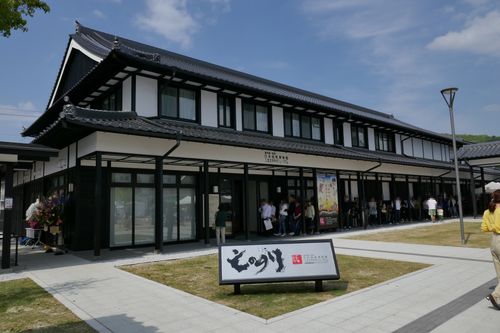
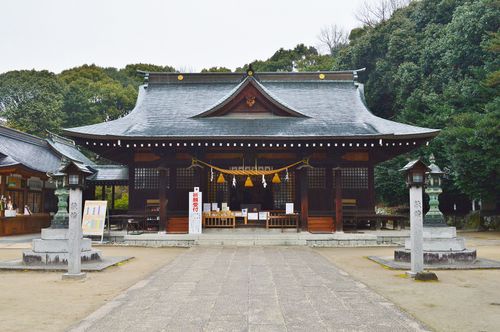
At the foot of the mountain is Kiyoshi Shrine, regarded as the tutelary shrine of the Mori family. At the traditional site of Osato Yashiki, said to be Motonari's residence, stand a statue of Motonari and the monument to the "lesson of the three arrows," which conveys his teaching. However, excavations found no remains, and it has been pointed out that the residence may have stood elsewhere. The Akitakata City Museum of History and Folklore at the foot of the mountain has materials related to the Mori clan.
The condition of the mountain path and how easy some remains are to see can change with the season. Before climbing, check the latest conditions through guidance such as that of the Akitakata Tourist Association.
Sources
This article was written from the official, municipal and tourism-association sources above, and checked against them separately from the writing. Editorial policy
Last updated November 12, 2026