ABOUT
About this spot
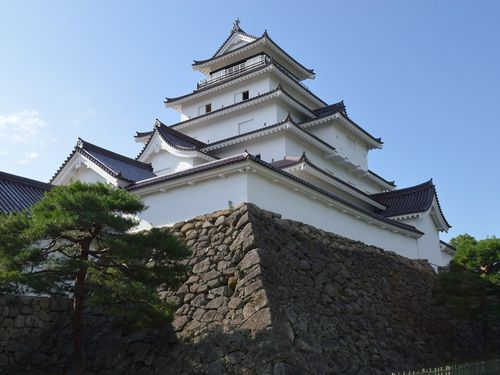
Higashiyama Onsen is a hot spring town in Aizuwakamatsu, Fukushima Prefecture, with inns lined along the Yukawa River, and it has long flourished as the back parlor of Aizuwakamatsu. It lies about 3 kilometers southeast of Tsuruga Castle. The hot spring is said to have been discovered by the monk Gyoki during the Tenpyo era. In the Edo period it thrived as a bathing resort for the Aizu domain, and together with Kaminoyama Onsen and Yunohama Onsen in Yamagata Prefecture it was once known as the Ou Three Pleasure Resorts.
It is also said to be associated with Ohara Shosuke, a figure in Aizu folk song, and it is introduced as a place visited by many historical figures, including Toyotomi Hideyoshi, Hijikata Toshizo, the Byakkotai, Ito Hirobumi and Yosano Akiko. Hijikata Toshizo of the Shinsengumi is said to have healed a battle wound at these springs.
Inns stand on both sides of the Yukawa River, and the green of the gorge and the sound of the water create the atmosphere of a hot spring town. The Yukawa has many waterfalls, and four of them, Amefuri-taki, Hara-taki, Mukai-taki and Fushimi-ga-taki, are known as the Four Great Falls of Higashiyama. Amefuri-taki is the largest, about 10 meters high and 16 meters wide, and its name is said to come from the way water shatters over large stone steps and looks like falling rain. Geisha still work in the town today and are called Karari-gi-san.
Walking along the river, you will find a foot bath on the riverbank. Near it is Zannen-zaka, a slope named after people who climbed it reluctantly on their way home from the springs, and which was once the road to Haguro Shrine. Beside Shintaki Bridge stands a poem monument to Takehisa Yumeji. Yumeji is said to have loved Higashiyama Onsen and painted a geisha here, and the monument is inscribed with a verse of "Yoimachigusa." Across the Yukawa River stands a poem monument to Yosano Akiko as well, inscribed with a poem recalling a trip with her husband Yosano Tekkan.
At a small roadside shrine by the river, Yonaki Jizo is said to cure a child's night crying when parents pray together. Going a little farther, you reach the worship hall of Haguro Shrine on the mountaintop, approached by a long stone staircase of about 1,225 steps, along which the thirty-three Kannon are placed; the climb is said to take about 30 minutes.
The town also suits as a base for sightseeing in Aizu. For the latest on inns and foot baths, please check with the Higashiyama Onsen Tourist Association before your visit.
Sources
This article was written from the official, municipal and tourism-association sources above, and checked against them separately from the writing. Editorial policy
Last updated November 12, 2026