ABOUT
About this spot
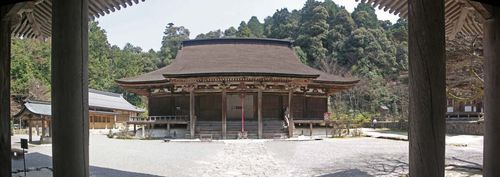
Taga Taisha is a shrine in Taga Town, Inugami District, Shiga Prefecture, long known affectionately as "Otaga-san." Its deities are the two kami Izanagi no Okami and Izanami no Okami. According to the Kojiki, these two deities began the way of husband and wife in the age of the gods and gave birth to the islands of Japan and the myriad deities. As parent deities who brought forth life, they have drawn faith as kami of longevity, marriage ties and protection from misfortune.
The Kojiki says Izanagi "resides at Taga in Omi," which some identify with this shrine. However, some read "Omi" as a copying error for "Awaji" and take it to mean Awaji Island, so there is no settled view. The Engishiki jinmyocho of 927 lists it as "Two deities of Taga Shrine" in Inugami District, Omi Province. From the medieval to early modern period, it drew crowds of commoners alongside Ise Shrine and the Three Kumano Shrines, and a folk song survives: "If you visit Ise, visit Taga as well; Ise and Taga are like parent and child."
Within the grounds is the Jumyo-seki, or Longevity Stone. The stone is associated with Shunjobo Chogen, who devoted himself to rebuilding Todai-ji; the shrine says he visited and was granted twenty more years of life, and people still pray here for long life. In Chogen's legend, a leaf of oak fell as he worshipped, and the worm-eaten marks looked like the character "en," so he took it to mean his life would be extended by twenty years. It is also said that after completing the rebuilding he came back to give thanks, sat down on a stone in the grounds and died as if falling asleep, and that stone is the Jumyo-seki. One of the shrine's crests, the worm-eaten folded oak leaf, comes from this story.
The Okushoin Garden is a nationally designated Place of Scenic Beauty, designated in 1935 and expanded in 2020. It is said that in 1588 (Tensho 16) Toyotomi Hideyoshi offered 10,000 koku of rice praying for his mother Omandokoro's recovery from illness, and that the garden was built on the strength of this offering. The stone arched bridge at the front of the grounds, also called the Taiko Bridge, is said to date from 1638. The garden is thought to have been made as the garden of the Fudo-in study hall. The Okushoin was rebuilt in 1774 and is a Shiga Prefecture designated tangible cultural property. The weeping cherry blossoms in spring and the autumn leaves at the Okushoin are well known.
The shrine buildings burned in 1615, and a member of the Kobori family was appointed construction magistrate by order of Tokugawa Iemitsu; they were completed in 1638. The present main hall was newly built in the early Showa period. The bell in the bell tower was cast in 1555 and is a Shiga Prefecture designated tangible cultural property. Each April the Korei Taisai festival is held, and each August the Mantosai lantern festival and others. Garden visits may be suspended or cancelled depending on the period, so please check the official website before you go.
Sources
This article was written from the official, municipal and tourism-association sources above, and checked against them separately from the writing. Editorial policy
Last updated November 12, 2026