ABOUT
About this spot
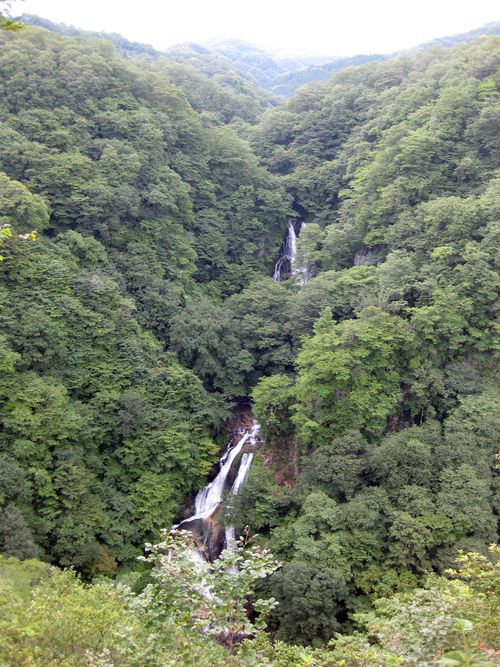
Ryuokyo lies roughly midway between Kinugawa Onsen and Kawaji Onsen, where the Kinugawa River has cut deep into volcanic rock. The eroded stretch continues for about 3 km and is part of Nikko National Park. Bare, rugged rock faces, strange rock formations and a string of waterfalls look like the trail of a dragon thrashing about, and this is said to be the origin of the name Ryuokyo, or Dragon King Gorge.
The gorge is divided into three sections by the type and color of its rock. Hakuryu-kyo has conspicuous rhyolite and many waterfalls, Seiryu-kyo is mainly tuff, and Shiryu-kyo is mainly andesite, so the character of the rock changes from section to section. Hakuryu-kyo has sights such as Niji-mi Falls, Tategoto Falls, Hakuryu-ga-fuchi, Daikan-seki, Gokoh-iwa and Usagi-tobi, while Seiryu-kyo has Zaimoku-iwa, Shishi-iwa and Shira-iwa.
The best-known sight is Niji-mi Falls. Its name, meaning Rainbow-Viewing Falls, comes from the rainbow that appears when sunlight hits it on a clear day. The stream from Nozawa drops into the Kinugawa here. Beside the falls stands Goryuo Shrine, which enshrines a dragon deity regarded as the guardian of Kinugawa and Kawaji hot springs, and the falls can be viewed from there too.
To see the gorge on foot, you follow the footpath. A loop from Ryuokyo Station via Nijimi Bridge and Musasabi Bridge is about 2 km and about an hour, and is described as suitable for beginners. The view of the gorge from Musasabi Bridge is the classic scene of Ryuokyo, and it is about a 20-minute walk from Niji-mi Falls. The path has steps and downhill sections, and what you go down you climb again on the way back, so shoes suited to mountain trails are best. It is slippery after rain, and from the rainy season through summer mountain leeches appear, so long trousers are recommended. A nature study trail also continues beyond toward Kawaji Onsen. Ryujin Shrine stands on the cliff top.
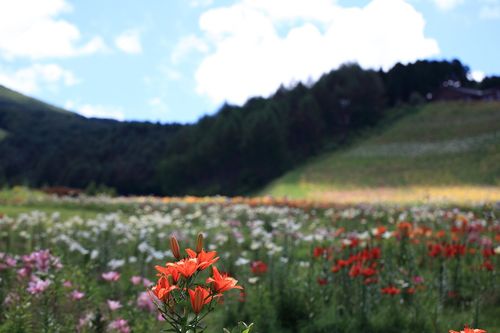
The seasons bring different faces. The autumn leaves are usually at their best from late October to early November, when many visitors come. Early-summer Japanese iris is a highlight, and the Ryuo Festival is held every year in late July. To avoid the crowds, arriving early in the morning helps you walk in peace.
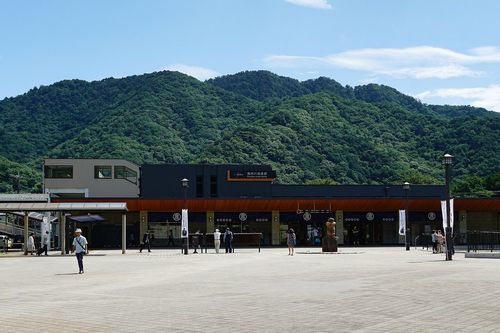
The nearest station is Ryuokyo Station on the Yagan Railway Aizu Kinugawa Line, and a municipal parking lot is in front of the station. Kinugawa Onsen is nearby, so it is easy to end a hot-spring stay with a walk through the gorge.
Sources
This article was written from the official, municipal and tourism-association sources above, and checked against them separately from the writing. Editorial policy
Last updated November 16, 2026