ABOUT
About this spot
The Sannai-Maruyama Site in Aomori City is the ruin of a large settlement from the early to middle Jomon period. It is thought to have been inhabited from about 3900 BC to 2200 BC, that is, from about 5,900 to 4,200 years ago, and the number of residents is thought to have been in the hundreds. In July 2021 (Reiwa 3) it was inscribed as a World Cultural Heritage site as part of the 'Jomon Prehistoric Sites in Northern Japan'.
Even in the Edo period it was already known that pottery and other items came out of this ground, and records exist in the 1623 Eiroku Nikki and in Sugae Masumi's Suka no Yama of 1796. Full-scale excavation began in 1992 (Heisei 4), prompted by a survey ahead of the construction of a prefectural baseball stadium. In 1994 six chestnut posts about one metre in diameter were found, and it was decided to halt construction of the stadium and preserve the site. It was designated a national historic site in March 1997 and a Special Historic Site in November 2000.
The core of the sights is the reconstructed large buildings. At the large post-hole building site, chestnut posts about one metre in diameter were found, and the spacing of the post holes was uniformly 4.2 metres. It is thought to have been a large raised-floor building with six posts, and it has been reconstructed. 4.2 metres is a multiple of 35 centimetres, and it has been suggested that the Jomon people may have had a common unit of measurement. The posts were made of chestnut, and their surfaces were charred to make them rot less easily.
The largest of the large pit dwellings is about 32 metres long and about 10 metres wide, and it is thought to have been used as a meeting hall or similar. Also, from the 'mounds', built up from piled everyday waste such as pottery and stone tools, came objects connected with ritual, such as clay figurines, jade and small pots. The valley rubbish dump, which was waterlogged and cut off from air, preserved lacquerware, wooden items, animal bones and plant seeds in good condition.
Traces of trade have also been found. A large jade bead shows contact with Itoigawa (the Joetsu area of Niigata Prefecture), the main source of jade, and obsidian is also said to have been obtained through trade with various regions. The 1,958 items excavated were designated Important Cultural Properties in 2003. There are also the remains of a road about 12 metres wide and about 420 metres long that runs toward the sea, pit graves where adults were buried in two rows along the road, and buried pots in which children were placed and buried near the dwellings. A stone-ringed grave is also thought to be the grave of a village chief.
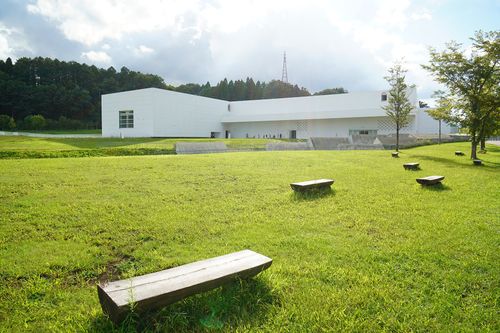
There is also a facility called the Jomon Jikan-kan. Access to some buildings and mounds may be restricted or closed to the public, so please check the latest information on the official website before you visit.
Sources
This article was written from the official, municipal and tourism-association sources above, and checked against them separately from the writing. Editorial policy
Last updated November 12, 2026