ABOUT
About this spot
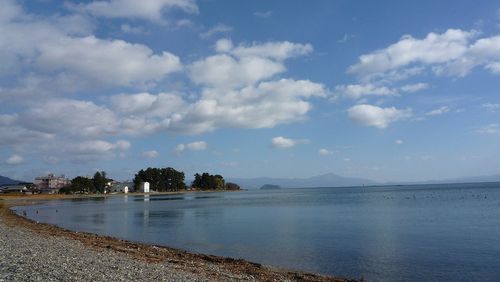
Shirahige Shrine stands in Ukawa, Takashima, Shiga Prefecture, and is known for its vermilion great torii rising from Lake Biwa. National Route 161 runs between the torii in the lake and the main hall, which face each other. Because of this sight it is called the "Itsukushima of Omi," and it is said to watch over navigation on Lake Biwa. In 2015 it was certified as a constituent cultural property of a Japan Heritage story.
The enshrined deity is Sarutahiko no Mikoto. He is regarded as a god of long life in the form of an old man with white hair and a white beard, and the name "Shirahige" (white beard) is said to come from this. He is worshipped for long life, as well as for love, children and good fortune. With about 150 branch shrines nationwide, it is regarded as the head shrine of the Shirahige shrines.
In its history, shrine tradition places its founding in the reign of Emperor Suinin and says Princess Yamatohime no Mikoto rebuilt the shrine buildings in the 25th year of his reign; it is called the "oldest great shrine in Omi." It is also said to have received the title "Hira Myojin" from Emperor Tenmu in Hakuho 3. Some see the original object of worship as Hira Myojin, whose sacred mountain is Mt. Hira behind the shrine. A map from 1280 (Koan 3) records "Shira-hige Daimyojin," regarded as the first appearance of the name "Shirahige." It also appears in the Taiheiki and the noh play "Shirahige."
The present main hall was rebuilt in 1603 (Keicho 8) by Toyotomi Hideyori, with Katagiri Katsumoto as magistrate. Hip-and-gable, with a cypress-bark roof, its front porch and other parts show features of the Momoyama period and is designated a national Important Cultural Property. In the precinct are the ema hall, the former worship hall, and the auxiliary shrine Wakamiya Shrine; the shrines enshrining Amaterasu Kotai Jingu and Toyouke Daijingu, and the Hachiman Sansho shrine, are designated cultural properties of Takashima City.
The great torii in the lake is drawn on land in the 1280 map and is said to have come to stand in water after the rise of Lake Biwa's water level. The present torii was rebuilt in 1981. The vermilion reflected on the water changes its look with water level, weather and light.
The precinct has many poem monuments, including those of Murasaki Shikibu, Yosano Hiroshi and Akiko, and Matsuo Basho's verse "from all four directions, blossoms blow into the Lake of the Grebes."
One caution: National Route 161 runs between the precinct and the great torii. Accidents have repeatedly occurred to people crossing, and a viewing platform has been set up on the lake side. Please do not force your way across the highway to approach the torii, and enjoy the view from a safe place.
Sources
This article was written from the official, municipal and tourism-association sources above, and checked against them separately from the writing. Editorial policy
Last updated November 12, 2026