ABOUT
About this spot
Standing on the heights of Takaoka overlooking the city of Tomakomai, this shrine is easy to spot by its huge torii gate. It enshrines three deities: Oyamatsumi no Kami, who governs mountains; Kukunochi no Kami, who governs trees; and Kayanohime no Kami, who governs fields. Mt. Tarumae itself has long been revered as the sacred mountain of the shrine. An inner shrine stands on the summit; its wooden building, made to commemorate the 1928 enthronement ceremony, was replaced in 1952 by a concrete hall.
The shrine is said to have begun in the early Meiji era, when Oyamatsumi no Kami was enshrined at the foot of Mt. Tarumae. In 1874 a request is said to have been made to build a shrine west of the Tomahoso post station, and in 1875 the three deities were fixed and the shrine moved from the mountain foot into the town center, where it became a village shrine (gosha). The Great Carp Streamer Fire of 1921 destroyed the shrine buildings and many records, but the shrine was rebuilt on a site in Yashiro-cho and held its formal enshrinement ceremony in 1923. It was raised to prefectural shrine rank in 1936 and added to the Association of Shinto Shrines' list of special shrines (betsuhyo jinja) in 1986. In 1992 the new shrine buildings, built as a project marking the Heisei enthronement, were completed, and the shrine moved from Yashiro-cho to its present site in Takaoka.
On the grounds, look for the simple wooden stone-marker beside the torii, the two hand-washing pavilions, the worship hall, and the pair of guardian dogs offered in 1997. The auxiliary shrines include Shotoku Shrine, which enshrines Prince Shotoku as the patron of building and civil engineering; Tarumae Tenmangu, dedicated to Sugawara no Michizane; and an Inari shrine. A stone frog, "Kaeru-san," and a Hotei figure are also beloved.
Among the annual events, the Mountain Opening Festival on the second Sunday of June and the Mountain Closing Festival on the first Sunday of October draw many climbers who pray for safety. The Grand Festival from July 14 to 16 is a signature summer event in Tomakomai: a children's portable-shrine procession on the eve, the main festival on the 15th, and a divine procession with a procession on the sea on the 16th.
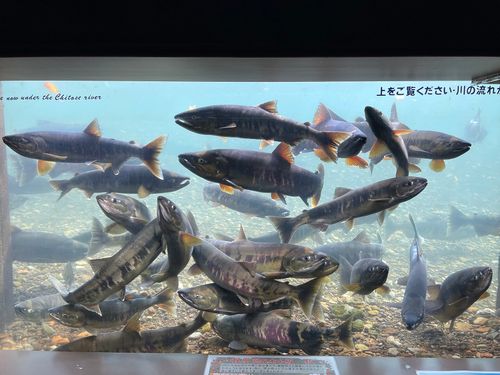
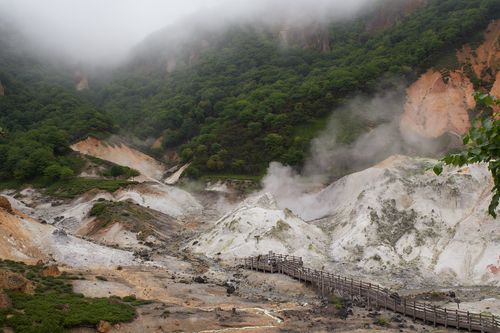
Allow roughly 30 minutes to an hour to pray and stroll the grounds. There is a parking lot just beyond the torii, and the shrine is about 5 minutes by car from the Tomakomai-Chuo Interchange on the Do-o Expressway. If you want to go farther, the Chitose Aquarium (about 20 km away), Upopoy (National Ainu Museum and Park, about 23 km away) and Noboribetsu Onsen (about 42 km away) are easy to combine.
Sources
This article was written from the official, municipal and tourism-association sources above, and checked against them separately from the writing. Editorial policy
Last updated November 16, 2026