ABOUT
About this spot
Kasama Inari Shrine, in Kasama, Ibaraki Prefecture, is also known as Kurumigashita Inari and Monzaburo Inari, and is counted as one of Japan's three great Inari shrines. Its deity is Ukanomitama no Kami, venerated as a protector of every kind of industry: agriculture, manufacturing, commerce and fishing. Today it holds the rank of a Beppyo shrine under the Association of Shinto Shrines.
According to the shrine's own tradition, it was founded in the second year of Hakuchi (651), in the reign of Emperor Kotoku. No written record of the founding survives, however, and the date rests on oral tradition. The shrine enters the historical record in the Edo period: in 1743 the castle lord Inoue Masakata enlarged the shrine grounds and buildings, and in 1747, when the Makino family became lords of Kasama, the shrine was designated the domain's place of prayer and received gifts of land and ritual implements. Successive lords revered it deeply, and Makino Sadanaga is said to have petitioned Kyoto and been granted the divine rank of Shoichii Inari Daimyojin.
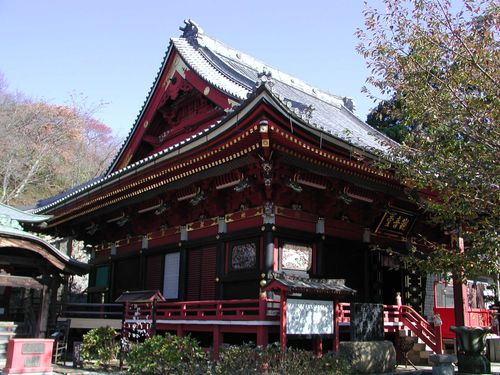
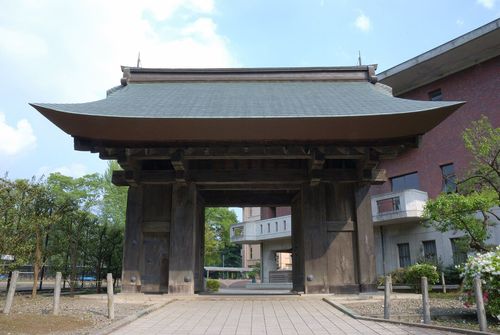
The present main hall was rebuilt at the end of the Edo period and is decorated with carvings by master craftsmen of the day. It was designated a National Important Cultural Property in 1988. The two-storied gate, Banzei Taihei-mon, was completed in 1961 (Showa 36) and the worship hall in 1960, so the precinct also includes buildings of the Showa era. The worship hall is painted mainly in vermilion; this color is called "Kasama vermilion" and was adopted as the unifying symbol color when the approach street was redeveloped.
Many sights are scattered around the precinct. There are two wisteria vines about 400 years old, and the double-flowered one was designated a prefectural natural monument in 1967; its blossoms resemble grapes. Five subsidiary shrines (Tsukuyomi, Hakusan, Sugawara, Awashima and Yamakura) stand here, and the Shotoku Hall, dedicated to Prince Shotoku, also enshrines Daikokuten and the Kotohira shrine. The Ema Hall, built in 1899, houses large votive paintings and plaques, and Zuiho-kaku, built in 1917 to commemorate the enthronement of Emperor Taisho, was designed by Ito Chuta.
The Kasama Inari Museum is modeled on the Shosoin repository in Nara; it opened in 1981 and permanently displays old ceramics from the Six Ancient Kilns of the medieval period. The street leading to the shrine gate has been undergoing streetscape improvements since 2013, and it is easy to walk together with a visit. The annual grand festival takes place on April 9, and the Kasama Chrysanthemum Festival runs from mid-October to the end of November. The festival traces back to a morning-glory show begun in 1890; chrysanthemum displays started in 1908, and a chrysanthemum doll exhibition was added in 1948.
Preservation work on the buildings has been carried out in the precinct. Before you visit, please check the shrine's official website for the latest information.
Sources
This article was written from the official, municipal and tourism-association sources above, and checked against them separately from the writing. Editorial policy
Last updated October 29, 2026