ABOUT
About this spot
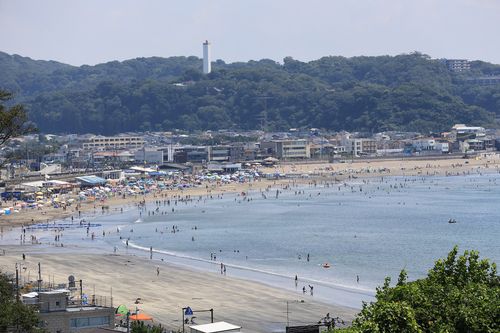
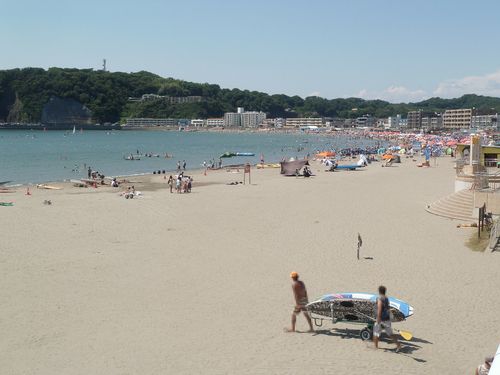
Kamakura's sea is not only Yuigahama. Zaimokuza Beach is the stretch of sand east of the mouth of the Nameri River, which flows through almost the center of the shoreline; the part to the west is called Yuigahama. It faces Sagami Bay, is shallow far out from the shore, and has been selected as one of Kamakura City's 100 Scenic Views.
The name is said to come from Zaimokuza, one of the "za" (guilds of merchants and craftsmen) of the Kamakura period. The area was known as the port of call "Wagae-no-tsu" and flourished as a distribution center for building materials such as timber. In the Edo period it was divided into Zaimokuza Village and Midaregoe Village, which later merged as "Midaregoe Zaimokuza" and, with the introduction of new address numbering, was divided into districts 1 through 6, as it is today.
Wagae-jima, at the eastern end of the beach, is a harbor facility said to have been built in 1232 (Teiei 1) at the request of the priest Oamidabutsu. It is a national historic site and is introduced in Agency for Cultural Affairs materials as "the oldest surviving harbor ruin in Japan." It is usually hidden by the waves, but at low tide an island-like structure of piled round stones appears above the surface. A tale is also told here that Minamoto no Sanetomo built a large ship to cross to Song China but could not launch it because the water was so shallow.
In the Meiji era the beach became a bathing beach, and it also became known through its appearance in Natsume Soseki's novel Kokoro. The swimming beach is still opened every year in July and August. Lifeguards watch over swimmers and swimming areas are set out, and since 2023 a "soft board area" has been provided for marine sports using soft surfboards. In 2014 a bylaw restricted drinking, smoking, sound equipment and open flames on the swimming beach.
The beach is also enjoyable in seasons other than summer. Along the water's edge, people go beachcombing for shells, sea glass and pieces of ceramics. If you time your visit with low tide, you can see the stonework of Wagae-jima up close. Pay attention to the waves and tide.
To get there, take a Keikyu bus bound for Zushi (via Kotsubo) from the east exit of JR Kamakura Station and get off at the "Zaimokuza" stop after about 8 minutes; the beach is a short walk away. By car, it is about 6 km, or about 15 minutes, from Asahina IC on the Yokohama-Yokosuka Road via Prefectural Route 204. Kamakura City publishes rules for barbecues at the seaside, so check them in advance.
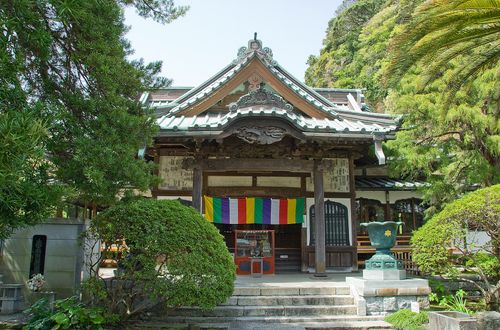
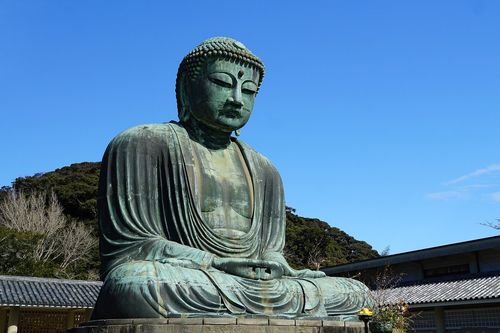
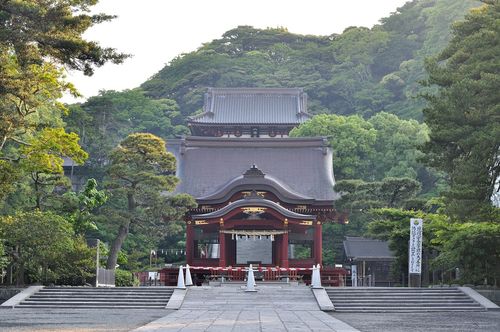
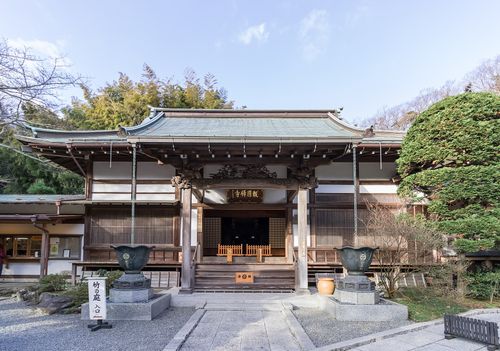
Around the beach are temples and shrines such as Komyoji, Kuhonji, Chosho-ji and Gosho Shrine. Among spots already listed, Yuigahama about 0.9 km away, Anyo-in about 1.1 km away and Kotoku-in (the Great Buddha of Kamakura) about 1.6 km away are close, so the location makes it easy to go from a walk on the sand to a tour of the old capital's temples.
Sources
This article was written from the official, municipal and tourism-association sources above, and checked against them separately from the writing. Editorial policy
Last updated November 16, 2026