ABOUT
About this spot
Motsuji is a Tendai Buddhist temple in Hiraizumi, Iwate Prefecture, ranked as a special head temple of the sect. Its principal image is a standing Yakushi Nyorai (the Medicine Buddha), flanked by Nikko and Gakko Bosatsu. According to temple tradition, it was founded in 850 (the third year of Kasho) by the priest Jikaku Daishi Ennin, in the same year as Chusonji. The grounds are designated a Special Historic Site and the garden a Special Place of Scenic Beauty, and the temple is part of the Hiraizumi World Heritage listing. The temple's own website introduces it as a place with a Pure Land garden said to express the Buddha's world on earth.
The temple's great halls were built up by the second lord of the Oshu Fujiwara clan, Motohira, and his wife, and by their son, the third lord Hidehira. The medieval chronicle Azuma Kagami records more than forty halls and pagodas and over five hundred monks' quarters. The main hall, Enryuji, was decorated with gold, silver and rosewood and is said to have been praised as unrivaled in the realm. The temple later suffered a fire in 1226 and war fires in 1573, and declined. In the Edo period it lay within the Sendai domain, and in the Kanbun era the surrounding land was turned into rice paddies. Excavations carried out over five years from 1954 gradually revealed its former appearance.
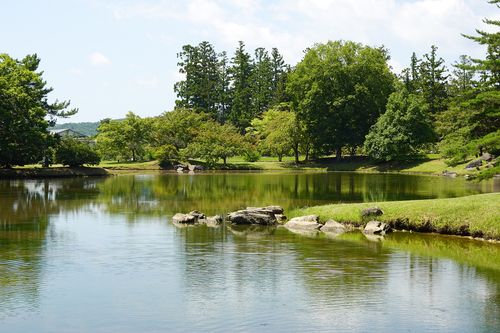
The heart of a visit is the Pure Land garden centered on the Oizumi-ga-ike Pond. It is regarded as a relic of the late Heian period, and the pond still retains an island, a pebble shore, an artificial hill, a jutting rock arrangement and standing rocks set in the water. The meandering stream that carries water into the pond is said to be the only one surviving from the Heian period in Japan, and poetry banquets are believed to have been held beside it. At the site of the Enryuji main hall the foundation stones remain almost intact, and the footprint has been restored to seven bays by six. Traces of the wing corridors on either side and of the towers at the front can also be seen, which helps visitors imagine how large the complex once was.
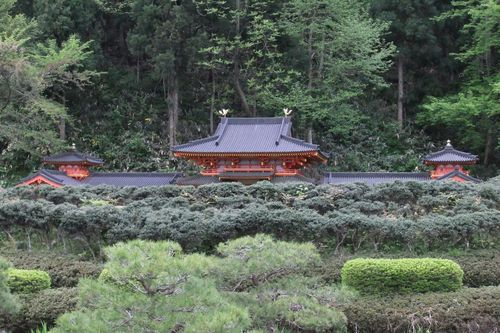
The halls standing today are the main hall, the Founder's Hall, the Jogyodo, the bell tower and the main gate. The main hall was rebuilt in the Heian style in 1989, and the Jogyodo was rebuilt in 1732 by Date Yoshimura. The gate is the main gate of Ichinoseki Castle, moved here in 1921. The temple also preserves a performing art called the Enen of Motsuji, designated an Important Intangible Folk Cultural Property.
Sites outside the grounds, such as the remains of Kanjizai-o-in, are included in the Special Historic Site as detached areas. The temple's website also introduces Zen meditation, sutra copying and Buddhist talks, in which visitors can hear about the temple's history and Buddhism. Motsuji is one of the stops on the Hiraizumi four-temple pilgrimage route. Details of visiting arrangements and events can change, so please check the official website before you go.
Sources
This article was written from the official, municipal and tourism-association sources above, and checked against them separately from the writing. Editorial policy
Last updated November 12, 2026