ABOUT
About this spot
In Ichijoji, in the northeast of Kyoto's Sakyo Ward, a residential neighborhood, stands the site of a mountain retreat run by Ishikawa Jozan. Its formal name is Rokurokusan Shisen-do Jozan-ji, but Jozan himself called the house Otsukaka, meaning a dwelling built on uneven ground; both the buildings and the garden follow the slope of the hillside. Today it is a Soto Zen temple whose principal image is Memorofu Kannon.
Ishikawa Jozan was a retainer of the Tokugawa family who became known as a man of letters skilled in Chinese poetry, calligraphy, and garden design. In 1641, at the age of 59, he built this retreat for his retirement and lived here with poetry until his death at 90 in 1672. The site is now a Soto Zen temple, also called Jozan-ji. The temple does not admit visitors on May 23, the anniversary of Jozan's death (Jozan-ki).
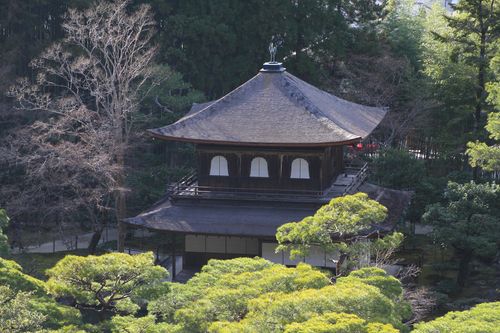
The Shisen-no-Ma, the room that gave the temple its name, has on its four walls portraits of 36 poets of the Han, Jin, Tang, and Song dynasties painted by Kano Tan'yu, with a Chinese poem written in clerical script by Jozan above each. The three-story Sho-getsu-ro above the entrance is regarded as a work of Jozan's own time, together with the Shisen-no-Ma; the other parts were rebuilt in later periods.
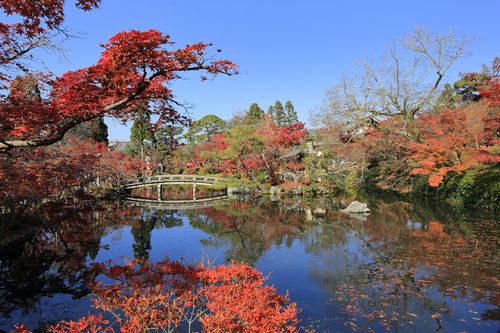
The garden, called Hyakkao, was designed by Jozan himself. It is a Chinese-style garden planted with azaleas and other shrubs, where the sound of the sozu (shishi-odoshi) echoes. The sozu was a practical device for scaring off deer and boar, said to have been devised by Jozan, and a small waterfall called Senmo-baku is also built into the southeast of the garden. Jozan named ten features of the buildings and garden the "Ten Views of Otsukaka" and enjoyed them. The walk from the entrance through a bamboo grove toward the buildings is part of the charm as well.
The azaleas in late May and the autumn leaves in late autumn are especially well known. Because there are stone steps from the entrance to the buildings, comfortable walking shoes are advisable. A temple with a garden is best enjoyed seated in the room, and moving slowly between the garden and the Shisen-no-Ma changes how it looks. Allow about 30 minutes to an hour for the buildings and garden together.
Within walking distance are Enko-ji, with its Jugyu-no-Niwa garden, and Konpuku-ji, home to Basho-an associated with the poet Matsuo Basho, so you can visit several temples on foot. A little further on is Manshu-in Monzeki. Seen as part of a tour of Kyoto gardens, the quiet beauty of Shisen-do's simple design stands out all the more.
Sources
This article was written from the official, municipal and tourism-association sources above, and checked against them separately from the writing. Editorial policy
Last updated November 15, 2026