ABOUT
About this spot
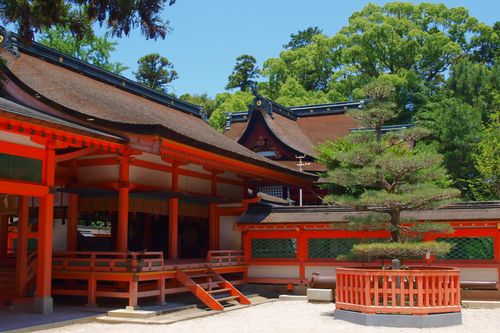
Miyajidake Shrine is a shrine in Fukutsu, Fukuoka Prefecture. It enshrines Okinagatarashihime-no-mikoto (Empress Jingu) and her two retainers, Katsumura-okami and Katsuyori-okami, together known as the "Three Deities of Miyajidake." It is regarded as the head shrine of Miyajidake shrines across the country and has long drawn faith as a god of good fortune who helps one overcome any difficulty, and as a god of business prosperity. Visitors are numerous and come from inside and outside Fukuoka throughout the year.
The first things that catch the eye in the precincts are the "three number-ones of Japan": the great shimenawa rope, the great drum and the great bell. The shimenawa hung on the shrine building is overwhelmingly large, and it is said to be remade every year from rice grown in the shrine's sacred paddy. The drum and bell are likewise described as the largest in Japan, and standing before the worship hall you are struck by their presence.
Behind the main hall are the Eight Shrines of Okunomiya. From the first shrine, Shichifuku Shrine, to the eighth, Yakushi Shrine, they include Inari Shrine, Fudo Shrine, Man Jizoson, Koi-no-Miya, Sanpo Kojin and Suijin Shrine, each enshrining different deities, and visitors walk from one to the next, praying in order with their wishes in mind. The path through these small shrines is one of the quietest parts of the grounds.
Another highlight is the Miyajidake Tumulus within the precincts. Built in the Kofun period, its horizontal stone burial chamber is among the largest in Japan, and it is known for the many burial goods found there, including items designated National Treasures. Because of the splendor of the finds, it is sometimes called the "underground Shosoin." As for the person buried there, one theory suggests a local chieftain of the Munakata lineage.
In recent years the "Path of Light" has become especially famous. The shrine's approach runs straight toward the sea, and twice a year, around February and October, the sun sets along the line of the approach and bathes it in a stripe of light. Many people gather with cameras to see the sun and the sea line up. The view varies with weather and timing, so it is reassuring to check the shrine's notices before you go.
The grounds also have a natural garden with old farmhouses moved from various regions, where seasonal flowers can be enjoyed. Nearby, the Tsuyazaki Kofun group from the same era is scattered around. Combining worship with a stroll and allowing plenty of time is recommended. The shrine is very crowded around the New Year, so visiting at another time lets you look around more calmly.
Sources
This article was written from the official, municipal and tourism-association sources above, and checked against them separately from the writing. Editorial policy
Last updated November 12, 2026