ABOUT
About this spot
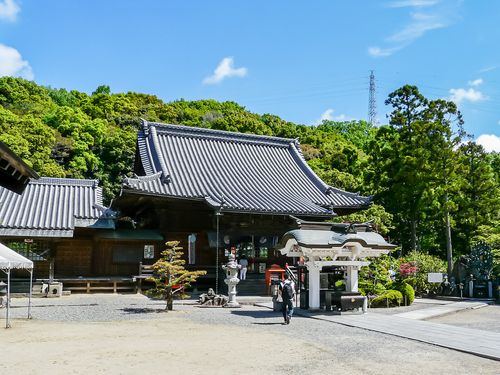
Ryozenji, in Naruto City, Tokushima Prefecture, is a Koyasan Shingon-sect temple and Temple No. 1 of the 88-temple Shikoku pilgrimage. Its mountain name is Jikuwasan, its main image is Shaka Nyorai, and as the starting point of the pilgrimage it is affectionately called "Ichiban-san." The precincts have a shop and a stamp office, and the 88-temple pilgrimage begins here.
According to the temple's tradition, it was founded during the Tenpyo era (729-749) by the monk Gyoki at the imperial request of Emperor Shomu. In 815 Kukai is said to have visited and trained for 21 days, naming it "Jikuwasan Ryozenji" because the place resembled a sacred mountain in India. In the Muromachi period it enjoyed the patronage of the Miyoshi clan and flourished as a large temple with seven halls, counted among the three great temples of Awa, but it was burned in 1582 in the fighting of Chosokabe Motochika and was later rebuilt. A fire in 1891 destroyed many of its halls, so most of today's buildings date from the rebuilding after it.
As for the numbering of the temples, the records tell us several things. That Kukai fixed the temples and their numbers is a story handed down at the temple, but it is not regarded as historical fact. The oldest surviving record of temple numbers is Shinnen's guidebook "Shikoku Henro Michishirube" of 1687, and it is surmised that this temple, close to the port, became No. 1. A travel diary written 34 years earlier by the monk Chozen, "Shikoku Henro Nikki," also records that it was customary to begin the round at this temple.
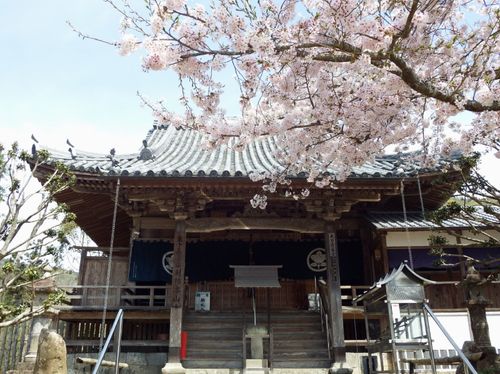
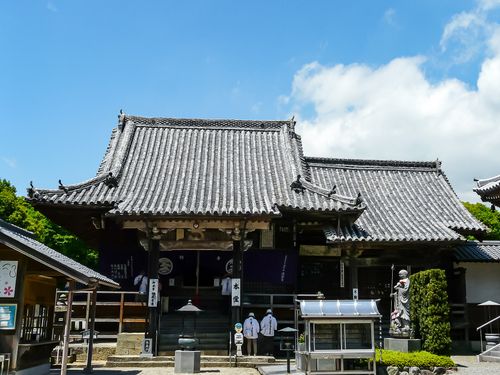
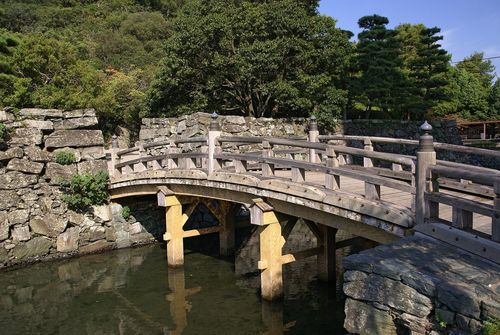
In the precincts, you pass through the "Gate of Awakening" (Hosshin-no-mon) from the east side to reach the temple gate, and the first highlight is the gate (Niomon), a two-storied gate with a hip-and-gable roof. The main hall is built as a worship hall with an inner sanctuary added, and a dragon is painted on the central ceiling of the worship hall, from which many hanging lanterns are suspended. The Daishi Hall stands in front of a large pond (the Hojo-ike), where figures of children are set in a pond crossed by a bridge. The two-tiered pagoda, said to date from the Oei era (1394-1428), is a building that survived the Meiji fire and enshrines statues of the Five Wisdom Buddhas. There are also the Thirteen Buddhas Hall, the bell tower and the Kishu hospitality station. Behind the hand-washing pavilion on the left inside the gate stands a stone statue of the Kannon of Good Matches, which visitors splash with water.
In 2015 Ryozenji was chosen as a component of the Japan Heritage story "Shikoku Henro." Temple No. 2, Gokurakuji, is near and can be reached on foot. Nearby are Torin-in, regarded as the inner sanctuary of Ryozenji, and the Awa provincial head shrine Oasahiko Shrine, which was the temple's inner sanctuary before the separation of Shinto and Buddhism; both can be visited on foot. Even if you are not walking the pilgrimage, this is a temple where you can feel the atmosphere of a starting point.
Sources
This article was written from the official, municipal and tourism-association sources above, and checked against them separately from the writing. Editorial policy
Last updated November 12, 2026