ABOUT
About this spot
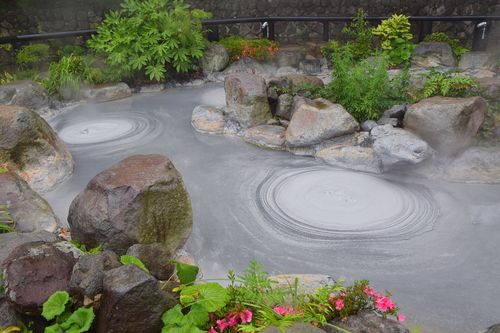
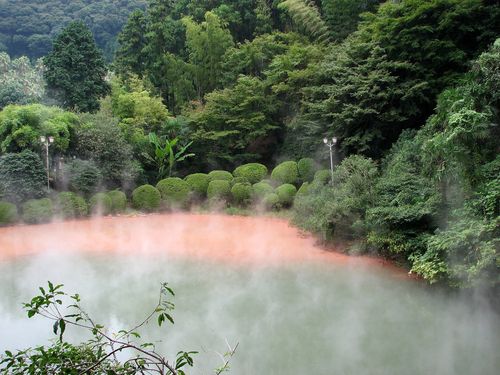
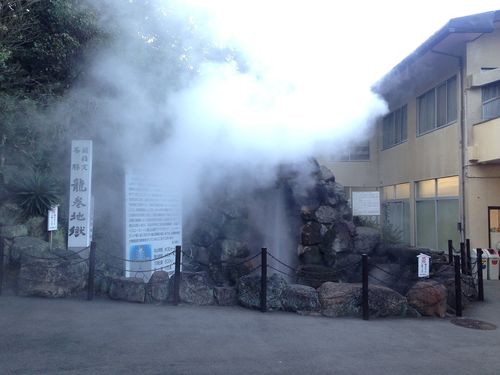
Umi Jigoku, the "Sea Hell," is a hot spring "hell" in the Kannawa district of Beppu, Oita Prefecture, one of the hells visited on the Beppu hell tour. The pond is cobalt blue, a color caused by iron sulfate dissolved in the spring water. The water is an acidic spring containing salt, with a temperature of about 98 degrees Celsius, and the source vein lies as deep as 200 meters. Because of its varied colors and forms it is designated a Place of Scenic Beauty of Japan, and in 2009 Umi Jigoku, Chinoike Jigoku, Shiraike Jigoku and Tatsumaki Jigoku were designated together as "Beppu's Hells" Places of Scenic Beauty.
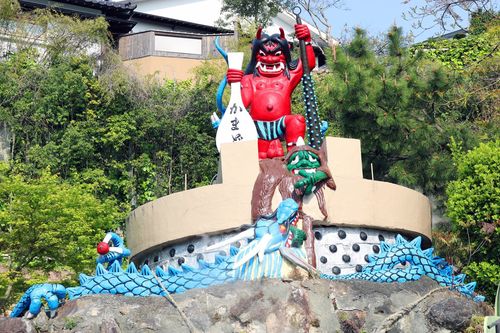
In the hell zone around Kannawa and Kamegawa, steam, hot mud and hot water are said to have been erupting for more than a thousand years, and they are recorded in the Bungo Fudoki. The Beppu hell tour is a classic sightseeing route around these naturally welling springs. Besides Umi Jigoku, Oniishi Bozu Jigoku, Kamado Jigoku, Oniyama Jigoku and Shiraike Jigoku are in the Kannawa district, while Chinoike Jigoku and Tatsumaki Jigoku are toward Shibaishi Onsen.
Inside Umi Jigoku, plants are grown using the heat of the hot springs. In a cultivation pond next to the main pond, giant water lilies native to the Amazon and tropical water lilies are raised. They bloom from early May to early November, and mornings are said to be the best time to see them. The giant water lilies grow so large that children weighing up to about 20 kilograms can stand on a leaf, and every year during the Obon period there is an event where children ride on the leaves.
There are other sights scattered through the grounds besides the pond. They include a haiku monument by Takano Suju, an observation deck from which the scenery can be enjoyed from a different angle, and an exhibition room called "Gallery Ao" where visitors can learn about the history of Umi Jigoku and how hells form. In the 9th year of Taisho (1920), Emperor Showa, then still crown prince, visited Umi Jigoku, and it is also said that the founder built a memorial monument in 1926 to commemorate this.
The heat of the springs is used for local specialties too. Onsen tamago, eggs placed in a bamboo basket and boiled in the blue water, are a famous product, and a bath powder called "Enman no Yu," made from the spring's minerals, is also sold. "Gokuraku Manju," sold since 1954, is steamed with the high-temperature natural steam, and a pudding steam-baked in the water of Umi Jigoku is also introduced as a recommended item. There is also a footbath for use after your visit.
Beppu's hells are not only for looking at but show how the land has used the heat of natural springs in daily life and food. These are places where scalding water gushes out, so please follow the signs in the grounds. Flowers, exhibits and shop offerings can vary by season, so check the official website before you visit.
Sources
This article was written from the official, municipal and tourism-association sources above, and checked against them separately from the writing. Editorial policy
Last updated November 12, 2026