ABOUT
About this spot
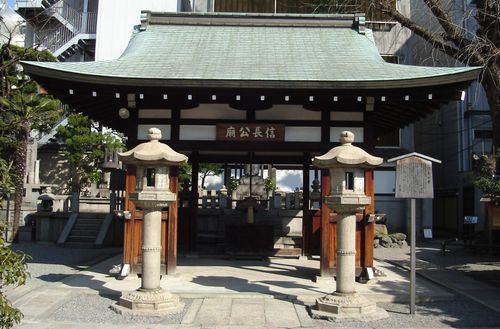
Facing Takakura-dori in the heart of Kyoto, Bukkoji is the head temple of the Shinshu Bukkoji school, a branch of Jodo Shinshu Buddhism. Its mountain name is Shibutanisan (Shirutaniyama), its principal image is Amida Nyorai, and its founder is said to be Ryogen. The temple is traditionally dated to the second year of Gen'o (1320), while temple lore traces its origin to a hermitage Shinran built in Yamashina in 1212.
When it stood in Shibutani in Kyoto (near today's Kyoto National Museum), it is said to have been far more powerful than the Hongan-ji. In 1481, however, the 14th head priest, Kyogo (Renkyo), took refuge in Rennyo and led many of the major branch temples into the Hongan-ji school, and the temple's strength declined rapidly. Its halls were later lost, partly in the turmoil of the Onin War, and in 1586 (Tensho 14) it moved to its present location in Shimogyo-ku at the request of Toyotomi Hideyoshi.
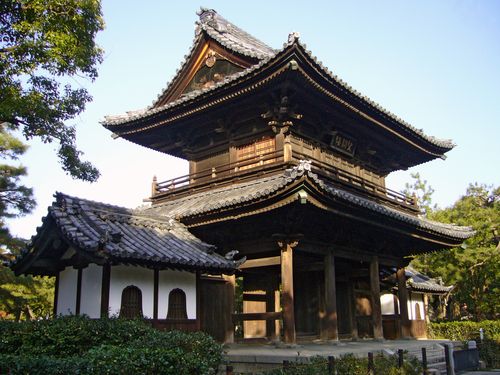
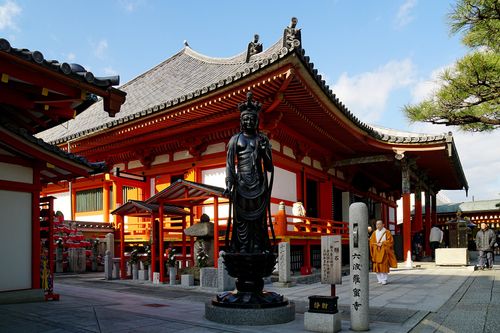
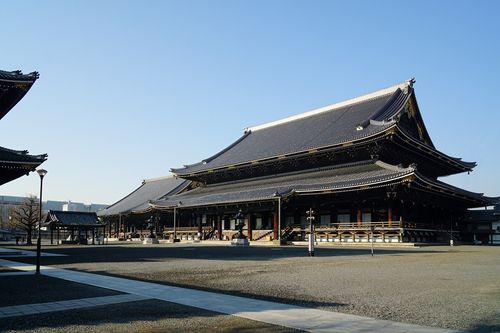
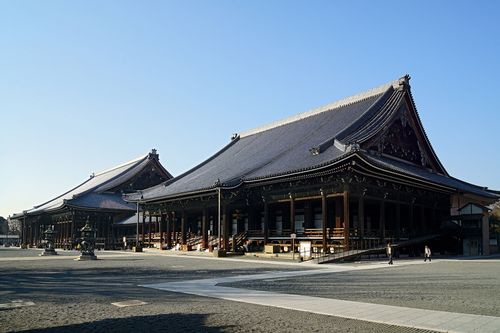
The center of the grounds is the Amida-do (main hall), which enshrines the principal image of Amida Buddha, and the Daishi-do, which enshrines a seated image of Shinran and other works. The Amida-do was rebuilt in 1904 (Meiji 37), the Daishi-do in 1884 (Meiji 17), and the Amida-do gate (main hall gate) in 1879 (Meiji 12). The temple also holds treasures that speak of its long history, including an Important Cultural Property wooden standing statue of Prince Shotoku and a color-on-paper genealogy of the Ichiryu lineage.
Just inside the Amida-do gate, on the left, stands the Wagosho, once used as lodging for monks and now home to the D&DEPARTMENT KYOTO shop. Facing the Daishi-do is the Goeido-mon, the main gate, and in the tea house between the two gates a Dharma talk is held every morning. The Goshoki Hoonko service is held from November 21 to 28 each year.
In spring the weeping cherry trees in the grounds bloom, giving the temple a festive air that is unexpected in the middle of the city. It is a quiet head temple in the city with two halls, and there is also a design shop with a cafe inside the grounds.
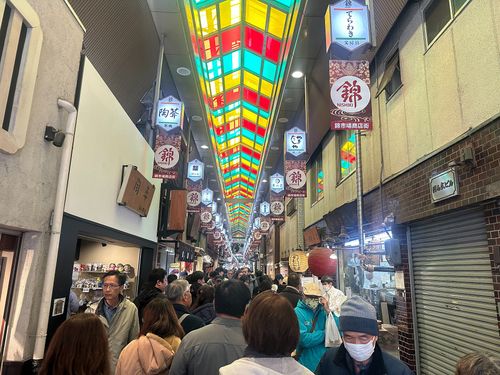
The surrounding area is close to Kyoto's downtown, including Nishiki Market and the Shinkyogoku shopping street; the nearest station is Shijo on the Kyoto Municipal Subway Karasuma Line, and Hankyu Karasuma Station is also within walking distance. The Kyo-karakami workshop Karamaru, where you can try the traditional craft, is also nearby, so you can drop in between shopping and eating. Please check the temple's notices for visiting hours and the office hours before you go.
Sources
This article was written from the official, municipal and tourism-association sources above, and checked against them separately from the writing. Editorial policy
Last updated November 16, 2026