ABOUT
About this spot
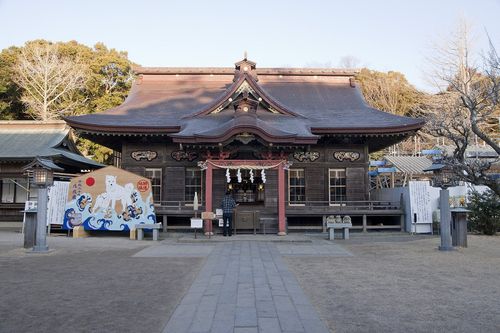
Kashima Jingu is a shrine in Miyanaka, Kashima City, Ibaraki Prefecture. It is the Ichinomiya (first-ranked shrine) of the former Hitachi Province, and its deity is Takemikazuchi-no-Okami. It is regarded as the head shrine of Kashima shrines across Japan and, with Katori Jingu and Iki Shrine, is counted among the Three Shrines of the East. It has been revered as a god of martial arts and of the founding of the nation.
According to the shrine's tradition, it was founded in the first year of Emperor Jimmu's reign, and the shrine itself takes that year as its founding. The Hitachi no Kuni Fudoki mentions the "Great God of Kashima", showing that it drew worship in eastern Japan from ancient times. The present main hall, offering hall and related buildings were built in 1619 (Genna 5) on the order of Tokugawa Hidetada and are Important Cultural Properties. The two-storey gate, the Romon, was donated in 1634 (Kanei 11) by Tokugawa Yorifusa; it is counted among Japan's three great Romon and is also an Important Cultural Property.
About 40 of the grounds' roughly 70 hectares are woodland designated a Natural Monument by Ibaraki Prefecture. The Okusando approach, which runs on to the inner shrine, is lined with trees. The inner shrine's main hall was donated by Tokugawa Ieyasu in 1605 as the old main hall, and is said to be the oldest building in the grounds. On the east side stands the Kaname-ishi, a stone believed to hold down the giant catfish that causes earthquakes; tradition says Tokugawa Mitsukuni had the ground dug around it but never reached its base. The Mitarai Pond, fed by spring water, is clear, and it is said that the water stays below chest height whether an adult or a child steps in; this too is counted among the Seven Wonders of Kashima. There is also a deer park where deer, regarded as the god's messengers, are kept. The shrine holds a national treasure straight sword, the Futsunomitama-no-tsurugi, about 2.7 m long including its hilt and scabbard. According to the official website, the Treasure Hall has been closed since 2018.
Many ceremonies take place through the year. The Saito-sai on March 9 is a nationally selected Intangible Folk Cultural Property, and the Hakuba-sai on January 7 and the Mifune-sai, held every twelve years in the Year of the Horse, are also well known. The Okusando tends to be quieter early in the morning. Allow about one and a half to two hours to visit the main shrine, the Kaname-ishi, the Mitarai Pond and the inner shrine.
Nearby, Iki Shrine, one of the Three Shrines of the East, lies outside the grounds, and you can combine your visit with Katori Jingu.
Sources
This article was written from the official, municipal and tourism-association sources above, and checked against them separately from the writing. Editorial policy
Last updated November 12, 2026