ABOUT
About this spot
Oharano Shrine stands at the foot of Mt. Oshio on the western edge of the Kyoto basin. It enshrines the same four Kasuga deities as Kasuga Taisha in Nara, which is why it is also called "Kyo-Kasuga" (Kasuga of Kyoto). According to shrine tradition, when the capital moved to Nagaokakyo in 784, Fujiwara no Otomuro, consort of Emperor Kanmu, invited a branch of the deities of Kasuga Taisha, the tutelary shrine of the Fujiwara clan, to this place. In 850 Emperor Montoku had the shrine buildings erected on the present site. Along with Kasuga Taisha and Yoshida Shrine it is counted among the three tutelary shrines of the Fujiwara clan, and it ranked among the Twenty-Two Shrines. Women of the Fujiwara family are also known to have prayed here for their daughters to become empresses, and a visit by Fujiwara no Takako, consort of Emperor Seiwa, in 876 and a ceremonial visit by an empress in 1005 are recorded.
The shrine fell into ruin after the Onin War and its rites lapsed, but restoration progressed in the Edo period, and the main halls were rebuilt in 1822. State-sponsored festivals were revived in 1865, and in 1871 the shrine was designated a mid-ranking state shrine.
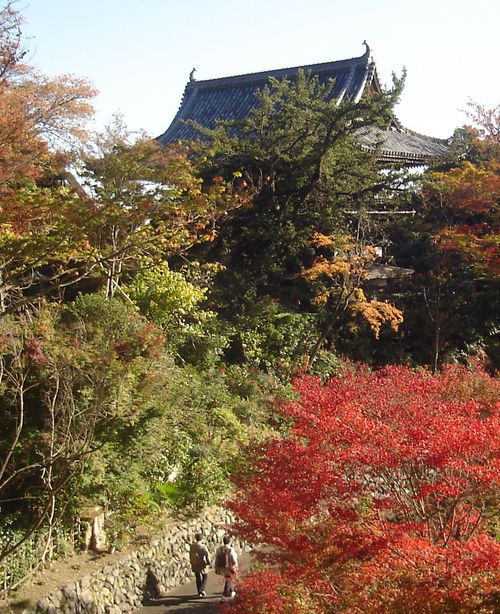
What first draws the eye is the main sanctuary, which follows the same style as Kasuga Taisha. Four single-bay Kasuga-style halls stand side by side, and with their cloisters and middle gate these vermilion buildings are designated Kyoto City Tangible Cultural Properties. The oldest building is the Wakamiya-sha from the early 18th century. Beside the approach spreads Koisawa Pond, said to be modeled on Sarusawa Pond in Nara; the sight of autumn leaves along the approach reflected in its water has been loved as a famed foliage spot since the Heian period; the leaves usually peak from mid to late November. In spring the "Sengan-zakura" cherry blooms; it stays in full flower for only a few days and is sometimes called a "phantom cherry." The grounds also hold a deer-shaped komainu guardian and a sumo ring.
Among the annual events, the main festival is held on April 8 in cherry blossom season, and on the second Sunday of September a ritual sumo bout called Kami-sumo is dedicated to the deities. It is a registered intangible folk cultural property of Kyoto City.
To get here, take a Hankyu bus to Minami-Kasuga-cho and walk about 10 minutes. From Kyoto Station the Keihan Kyoto Kotsu bus takes about 44 minutes to the same stop. By car, it is about 3 km from Kutsukake IC on the Kyoto Jukan Expressway, with parking for about 80 cars.
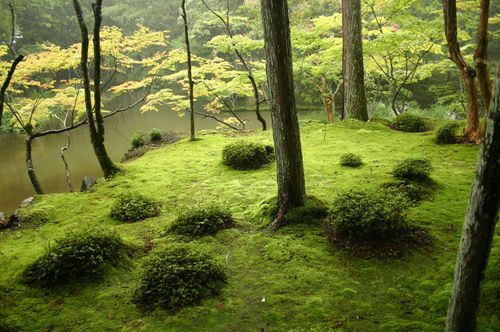
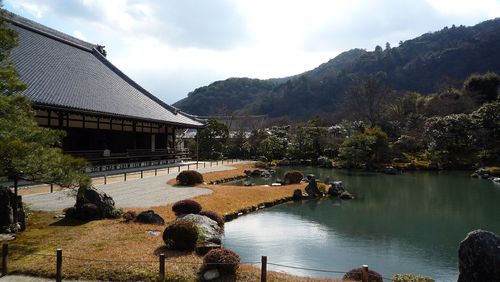
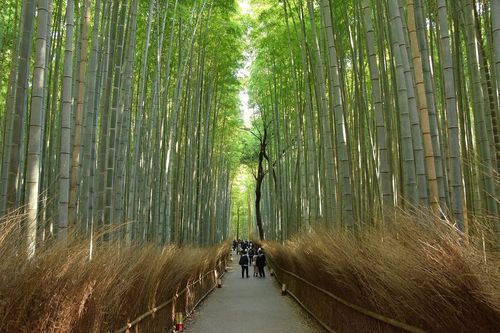
Other sights within a few kilometers include Saiho-ji Temple (about 4.4 km), Tenryu-ji Temple and the Bamboo Grove Path in Arashiyama (both about 6.4 km), so the shrine is easy to add to a tour of western Kyoto. Enjoy the atmosphere of a quiet precinct at the foot of the mountain where Heian aristocrats once prayed.
Sources
This article was written from the official, municipal and tourism-association sources above, and checked against them separately from the writing. Editorial policy
Last updated November 16, 2026