ABOUT
About this spot
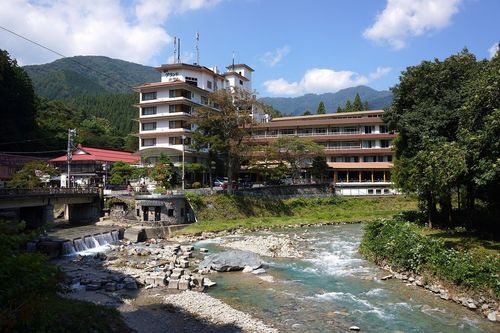
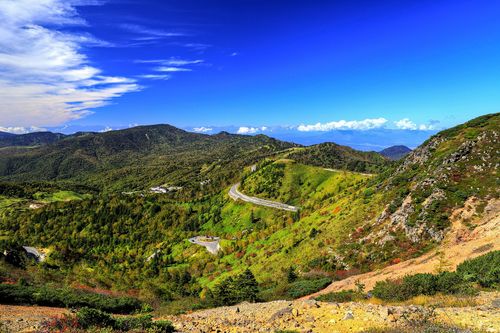
This gorge runs for about 4 km along the middle reaches of the Agatsuma River, from Kawarayu in Naganohara to Matsuya in Higashiagatsuma. The river has cut through Miocene andesite and tuff breccia, and the drop from the road to the water is around 50 m. Deciduous broadleaf trees such as maples and sawtooth oaks cover the slopes, and the valley has long been loved for its autumn colors. On 24 December 1935 it was designated a national Place of Scenic Beauty under the name Agatsuma-kyo.
The main attractions are the "Agatsuma-kyo Jukkei," ten scenic spots within the gorge: Benten-jima, Wakaba-dai, Byobu-iwa, Hotei-iwa, Hatcho Kuragari, Ryuto-iwa, Ryubi-iwa, Momiji-dai, Shinhorai and Shiraito Falls. Hatcho Kuragari, where the river is at its narrowest, is regarded as the highlight of the gorge. Shiraito Falls now lies beneath the surface of Lake Yamba-Agatsuma, but Shirakinu Falls and the old Tarusawa Tunnel of the former JR Agatsuma Line are still there.
To enjoy the gorge on foot, start from the exploration path that runs from the Michi-no-Eki Agatsuma-kyo roadside station. From Sarubashi (a steel footbridge opened in 2017, 43 m long and 3 m wide), Shikatobi Bridge and Momijidai Bridge you can look down on the stream and the rock walls. The lookout is introduced as the one place from which Yamba Dam can be seen head-on. The path is closed in winter, and comfortable walking shoes are recommended.
The valley was once a difficult barrier to travel. Attempts to cut a route through it were made from the Edo period, and in 1895 a new road was opened with private funds. A railway followed, Yamba Dam was completed in 2020, and the hot spring town of Kawarayu was moved to higher ground. The geographer Shiga Shigetaka called the gorge the "Yabakei of Kanto," the poet Wakayama Bokusui wrote verses about it, and Kawase Hasui made a woodblock print titled "Agatsuma-kyo" in 1943. It also appears in the JoMo Karuta cards, and local people take pride in it.
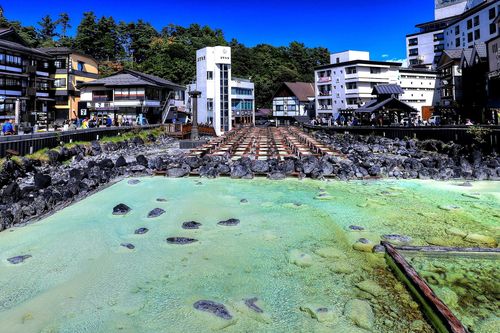
Good times to visit are mid-April for spring azaleas, May for fresh greenery, and usually October to early November for the autumn leaves. The area is crowded in the foliage season and the Michi-no-Eki parking lot can fill up, so it helps to consider other car parks such as Keikoku Parking. The gorge is easy to combine with other Gunma destinations such as Kawarayu Onsen, Kusatsu Onsen, Shima Onsen and Haruna Shrine.
Sources
This article was written from the official, municipal and tourism-association sources above, and checked against them separately from the writing. Editorial policy
Last updated November 15, 2026