ABOUT
About this spot
Dejima is a nationally designated historic site in Nagasaki City and a fan-shaped artificial island built by the Edo shogunate. It was constructed between 1634 and 1636 for the purpose of managing the Portuguese. Its area was about 3,969 tsubo, roughly 1.5 hectares, and records say that townspeople known as the Dejima-chonin financed the construction. It is regarded as Japan's first full-scale artificial island.
The years 1639 and 1641 changed its history. The Portuguese were expelled from Dejima in 1639, and in 1641 the Dutch trading post at Hirado was moved there. From then on, trade with the Dutch continued for about 218 years with Dejima as its base. The head of the post was called the Kapitan, and the Kapitan's journey to Edo was held every four years after 1790; by 1850 it had taken place 166 times. A fire in 1798 destroyed the western half of the island, including the Kapitan's residence, and the rebuilt residence was completed in January 1809.
After the country opened in 1859, Western-style buildings and warehouses lined the island, and in 1866 it became a foreign settlement. In the Meiji era, harbor improvements led to the surrounding waters being reclaimed, and when the work was completed in 1904 the fan shape was lost. In 1922 it was designated a national historic site as the Site of the Dutch Trading Post at Dejima. From 1952 the city of Nagasaki bought up privately owned land, and the transfer to public ownership was completed in 2001.
The current restoration aims to bring back the appearance of the early nineteenth century, set around the 1820s when the post chief Blomhoff and the physician Siebold were active. Work began in 1996; the Hetor's quarters and the first and second warehouses were finished in April 2000, the Kapitan's room (17.5 tatami mats) and other buildings in 2006, and the sixteenth warehouse and the Old Stone Warehouse, among others, in 2016. According to the official website, sixteen buildings, including the Kapitan's room, have been restored.
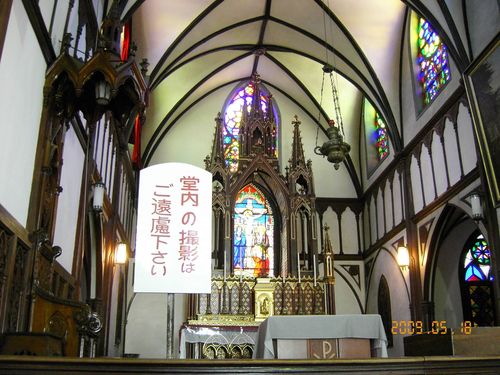
The restored buildings are not the only attraction. The original embankment stone walls unearthed in excavations have been repaired and are open to view. The Old Stone Warehouse belonged to the Hartmann trading company, with which the Kameyama Shachu led by Sakamoto Ryoma dealt in the late Edo period. The Old Dejima Theological School is the oldest surviving Protestant seminary building in Japan. The former Nagasaki Naigai Club building was a venue for an international club that Toyosaburo Kuraba, son of Glover, helped establish, and a restaurant now operates on its ground floor. In 2017 the Dejima Omote-mon Bridge was set in the same place for the first time in 130 years, restoring the entrance between the island and the city.
Sources
This article was written from the official, municipal and tourism-association sources above, and checked against them separately from the writing. Editorial policy
Last updated November 12, 2026