ABOUT
About this spot
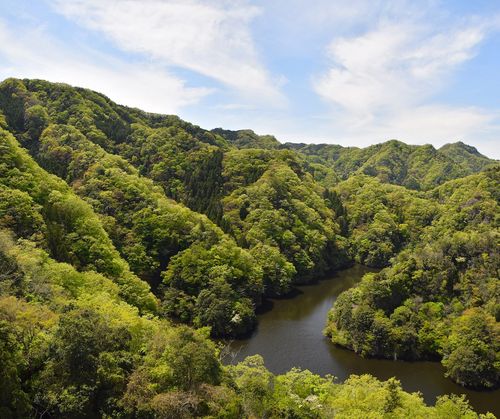
This is the site of the retirement residence of Tokugawa Mitsukuni (known as Mito Komon), the second lord of the Mito domain, tucked into the Nishiyama valley in Hitachiota. It lies deep in a valley at the northernmost edge of the Kanto Plain, and in 2016 it was designated a national historic site and place of scenic beauty under the name "Nishiyama Goten Ato (Seizanso)." Today the whole grounds are called Seizanso.
In 1690 (Genroku 3) Mitsukuni handed the domain to his successor Tsunaeda, and in 1691 he moved into the newly completed Nishiyama Goten so that he could concentrate on compiling the Dai Nihonshi (Great History of Japan). He spent the ten years until his death on December 6, 1700 here, and while compiling the history he mixed warmly with local people, who called him "Komon-sama." He also took on inspection tours of the domain and cultural projects.
The residence is a plain building with a thatched roof and earthen walls, and its interior walls are left rough. It reflects Mitsukuni's dislike of ostentation. He regarded these mountains as an ideal world apart from the everyday one, and tradition says he released deer in the surrounding hills, cranes in the fields, and planted medicinal herbs.
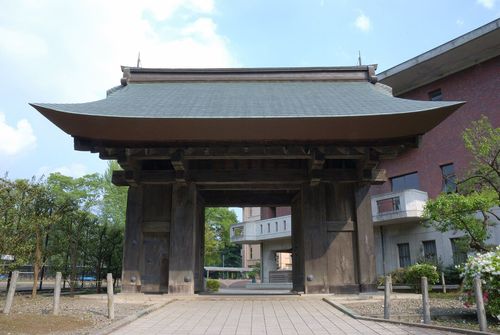
The present building was rebuilt in 1819 (Bunsei 2) by the eighth lord, Tokugawa Nariyoshi, on a reduced scale, after a wildfire destroyed the earlier one in 1817. The hall stands on slightly raised ground and is surrounded by a pond-style garden of about 1,000 tsubo. There are two ponds: Shinji-ike (also called Byakuren-ike), which you view the hall across, and Guren-ike, seen across a stone bridge; you can also see waterfall stonework and a dry-waterfall arrangement, and a grove of Kumano cedars stands nearby. The front gate, Tsukiage-mon, is a simple gate Mitsukuni devised to suit the surrounding trees, and it is named for the way its door is propped open during the day.
On the grounds, the residence of a guard samurai of the time has been reconstructed and serves as a museum displaying items connected with Mitsukuni. The site is managed and opened to the public by the Tokugawa Museum, a public interest foundation that preserves materials handed down in the Mito Tokugawa family, and its annex "ANNEX" opened in January 2018. The site is valued because the landscape Mitsukuni treasured is still well preserved and because it commemorates the place where he personally proofread the Dai Nihonshi.
Walking slowly through the thatched hall and the garden in the valley gives you a glimpse of Mito's scholarship and of life in retirement.
Sources
- ja.wikipedia.org
- online.bunka.go.jp
- tokugawa.gr.jp
- city.hitachiota.ibaraki.jp
- kanko-hitachiota.com
- garden-guide.jp
This article was written from the official, municipal and tourism-association sources above, and checked against them separately from the writing. Editorial policy
Last updated November 16, 2026