ABOUT
About this spot
Kourakukan is a traditional playhouse in Kosaka, in the northeast of Akita Prefecture, and the building is designated a national Important Cultural Property. It was built in 1910 (Meiji 43) as a welfare facility for the Kosaka Mine and opened on 16 August that year. The opening performance is said to have been given by the troupe of Onoe Shokaku from Tokyo kabuki. The theatre was born from the prosperity of the Kosaka Mine as a place of entertainment for the miners and their families. At the time it covered 340 tsubo and had a capacity of 800 people.
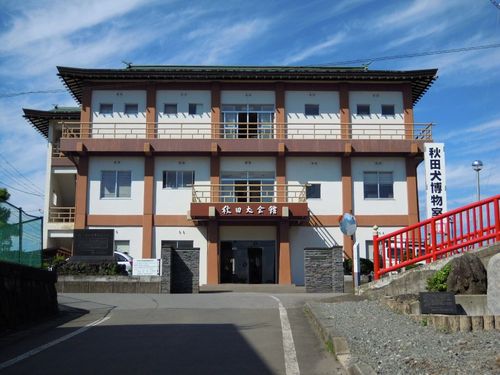
It was built by Fujita-gumi, the company that ran the mine, and its design is attributed to Yamamoto Tatsunosuke, the mine's head of machinery works. The wooden two-storey building has a gabled, front-entrance roof, white clapboard walls lined with sash windows and a sawtooth-patterned eave decoration, so the exterior looks like a Western-style house. Inside, however, it has the features of a Japanese playhouse: sajiki box seats, a hanamichi runway and trapdoors. This blend of Western and Japanese styles is a highlight. The roof is now copper-plated; originally it was covered with cedar boards.
The stage has a revolving stage that has been there since the theatre opened. It is turned by hand with pulleys and ropes. The woven Nishijin curtain carries the design "Juhyo" (Rime-Covered Trees), painted by the Nihonga artist Fukuda Toyoshiro, a native of Kosaka.
Gatherings that invited the miners' families were suspended during the war, revived afterwards, and ended in 1957. As the building aged and television spread, general performances stopped in June 1970 and the building faced demolition. The actor Ozawa Shoichi and others led a preservation campaign, and in 1985 the owner, Dowa Mining, transferred the building and land to Kosaka Town. After restoration it reopened in July 1986. In 1995 the street it faces was named Meiji Hyakunen-dori, and in 1999 visitors since the reopening passed one million. It was designated an Akita Prefecture Tangible Cultural Property in 1986 and a national Important Cultural Property in 2002, together with the former Kosaka Mine Office.
Today regular performances are held, and when no show is on you can tour the interior and see the stage mechanisms up close. Schedules for performances and tours change with the season, so please check the official information before you visit. The former Kosaka Mine Office, moved and restored on the neighbouring site, is also an Important Cultural Property. Walking along the nearby Meiji Hyakunen-dori street lets you trace the look of the old mining town.
Sources
This article was written from the official, municipal and tourism-association sources above, and checked against them separately from the writing. Editorial policy
Last updated November 12, 2026