ABOUT
About this spot
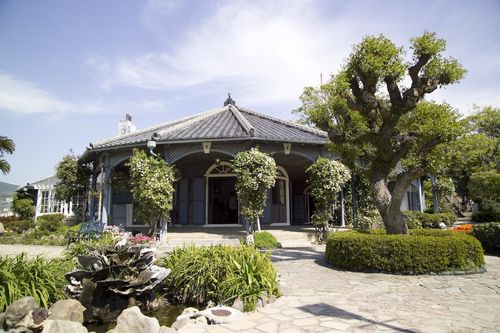
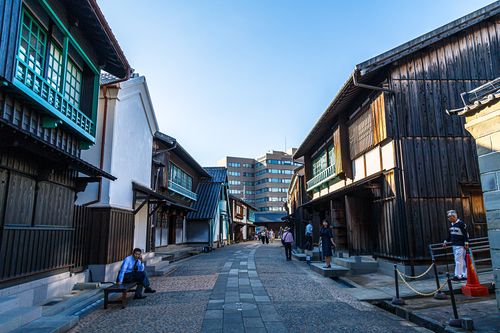
Oranda-zaka ("Dutch Slope") is a stone-paved slope in Higashi-Yamate-machi, Nagasaki. It was once a general name for the stone-paved slopes of the former foreign settlement in Oura, Higashi-Yamate and Minami-Yamate, but in the Nagasaki city tourist guide it now refers to three slopes: the slope in front of Jokoin, Kwassui-zaka, and the slope below Kwassui Gakuin. Fifteen Western-style houses line the route, conveying an exotic atmosphere, and Nagasaki Port spreads out below. It is also one of the elements of the Nagasaki Higashi-Yamate Important Preservation District for Groups of Traditional Buildings.
In 1857, ahead of commercial treaties with Western powers, the shogunate planned a foreign settlement around Oura Bay. After large-scale development including reclaiming parts of the bay, it was leased to foreign countries from 1860. The settlement consisted of the reclaimed flat land of Oura and the hills of Higashi-Yamate and Minami-Yamate to its north and south, and the flat land and hills were linked by stone-paved slopes of sandstone brought from the Goto Islands and Amakusa. Foreigners built their residences on the high ground with its fine views.
As for the name, it is said that people in Nagasaki, influenced by the Dutch at Dejima, called foreigners other than Asians "Oranda-san." The slopes in the settlement were all called Oranda-zaka in the sense of "the slope the Dutch walk." According to a Nagasaki city document, the slope in front of Jokoin is said to have been the first to be called Oranda-zaka. At the foot of the path up to the Kaisei High School gymnasium, a marker reads "Site of the Anglican Church"; the church built there in 1862 was Japan's first Protestant church, and during the settlement era many foreigners are said to have walked up this slope to worship each Sunday.
From the 1950s, the growth of car traffic damaged the paving, and more places were covered with asphalt. A restoration was therefore carried out from 1985 to the following year, and a small park was created beside the road. In 1986 the slope was selected as one of the "100 Roads of Japan," and a commemorative monument stands in the park. According to city materials, the gradient varies by place, about 7 degrees on Kwassui-zaka and about 15 degrees on the Ishibashi tram-stop side.
Along the route are Kwassui Women's University, Higashi-Yamate No. 12 House, Higashi-Yamate Ko-13 House, Russell Memorial Hall and the Higashi-Yamate Western-style houses. Since it is also a daily road for people living on the hill, please walk quietly. The scene of the stones glistening in light rain is said to be especially atmospheric, and the slope appears in songs such as Hamako Watanabe's "Ame no Oranda-zaka" and Masashi Sada's "Ehagaki-zaka."
Nearby in Minami-Yamate is Dondon-zaka, named for the way water flows with a "don-don" sound when it rains, and it keeps a strong flavor of the settlement era.
Sources
This article was written from the official, municipal and tourism-association sources above, and checked against them separately from the writing. Editorial policy
Last updated November 12, 2026