ABOUT
About this spot
Isaniwa Shrine stands on a rise in Sakuradani-cho, Matsuyama, Ehime Prefecture, close to Dogo Onsen. It is also called Yuzuki Hachiman or Dogo Hachiman. It is a shikinaisha, a shrine listed in the Engishiki Jinmyocho compiled in the Heian period, and was formerly ranked as a prefectural shrine. The enshrined deities are Honda-wake (Emperor Ojin), Tarashinakatsuhiko (Emperor Chuai), Okinaga-tarashi-hime (Empress Jingu) and the three Munakata goddesses.
According to tradition, the shrine was founded on the site of a temporary palace where Emperor Chuai and Empress Jingu stayed when they bathed in the hot spring. It originally stood on the spot where Yuzuki Castle was later built, and is said to have been moved to its present location when the Kono clan built that castle in the Kenmu era at the start of the Nanbokucho period.
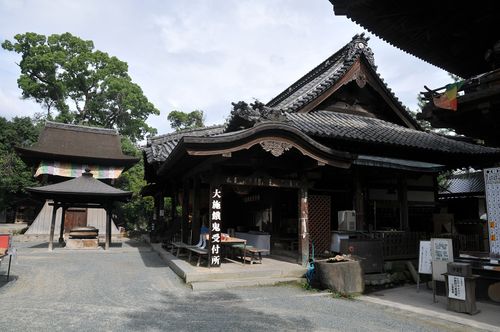
The main attraction is the shrine buildings, designated Important Cultural Properties. The main hall is in the Hachiman-zukuri style, in which two buildings, front and back, are joined together; it is said to be modeled on Iwashimizu Hachimangu in Kyoto and is counted among the three great Hachiman-zukuri shrines of Japan, together with Iwashimizu Hachimangu and Usa Jingu in Oita. The roof is covered with cypress bark, and the pillars at the front and porch bear gold-leaf decoration said to carry the Momoyama style. Besides the main hall, the Saruden (offering) hall in front, the two-story gate and the corridors are also Important Cultural Properties. The present buildings were rebuilt in the Edo period by the third lord of Matsuyama, Matsudaira Sadanaga, in thanks for performing yabusame mounted archery successfully at Edo Castle, and took about three years to build. Accounts differ on the year construction began.
The shrine also preserves traces of the era when Shinto and Buddhism were combined. Nearby Hogon-ji and Ishite-ji temples once served as its administrators. The carved bracket decorations of the corridor are said to depict Ippen Shonin, founder of the Ji sect, so Buddhist architectural motifs can be seen even at a shrine. The annual grand festival is held every October, and neighborhood portable shrines gather during it.
The Dogo Onsen Honkan and Dogo Park, which has the Yuzuki Castle ruins, are close by, so the shrine is easy to combine with a stroll through the hot spring town. It stands on a rise about a five-minute walk from Dogo Onsen Station, so you climb a slope to worship. The longer you look at the details of the decoration up close, the more the dignity of the buildings comes across. The areas open to visitors and the state of repairs can change, so please check official information before visiting.
Sources
This article was written from the official, municipal and tourism-association sources above, and checked against them separately from the writing. Editorial policy
Last updated November 12, 2026