ABOUT
About this spot
Sendai Castle was built on Mt. Aoba in Sendai, Miyagi Prefecture, and is also called Aoba Castle. Date Masamune built it during the Keicho era, and for about 270 years it was the seat of the Date clan and the administrative center of the Sendai domain. Today the castle site is part of Aoba Mountain Park and is one of Sendai's leading sights.
Construction began in December 1600 (Keicho 5), when Masamune climbed Mt. Aoba and started marking out the layout. The place name was changed to "Sendai" at that time. It was a mountain castle with a main enclosure and a western enclosure, and although a keep platform exists, no keep was ever built. The layout differed from the fashion of the day, but the Spanish envoy Vizcaino is said to have called it one of the finest and strongest castles in Japan. Mt. Aoba served as the castle's rear forest, forming a natural line of defense together with the Hirose River and the Tatsunokuchi Gorge.
The palace in the main enclosure had a great hall of 430 tatami mats, said to have been decorated with gold-and-blue paintings by the Kano school. From the Choeikaku pavilion, which projected out over the cliff, one could look over the castle town. In 1638 (Kanei 15) the second lord, Tadamune, began building the second enclosure, and after he moved his residence there in 1639 it became the center of government. Sendai was not a battlefield in the Boshin War, and the castle was never attacked.
The Otemon gate and its flanking turret were designated National Treasures in 1931, but they were burned in the Sendai air raid of July 10, 1945. The present turret was rebuilt with donations and is the only reconstructed structure on the site. Recent surveys, however, showed that its shape differs from the one lost in the fire, and a plan has been set out to rebuild it in its original form together with the Otemon gate. The site was designated a National Historic Site in 2003 and was selected as one of Japan's Top 100 Castles in 2006.
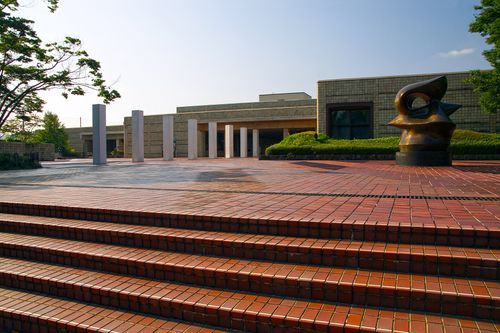
Visitors find the equestrian statue of Date Masamune on the plaza of the main enclosure, with the Hirose River, the greenery of Kyogamine and the city of Sendai spread out below. The Miyagi Gokoku Shrine and the Sendai Castle Exhibition Hall are also in the main enclosure. The stone walls are a highlight too: excavation during repair work on the main enclosure walls revealed walls from different periods and traces of past collapses caused by earthquakes. The Sendai City Museum stands on the site of the third enclosure, and a path from there climbs to the main enclosure. The second enclosure site is now Tohoku University's Kawauchi Campus. Preservation and reconstruction plans are ongoing, so please check Sendai City and other guides for current conditions on site.
Sources
This article was written from the official, municipal and tourism-association sources above, and checked against them separately from the writing. Editorial policy
Last updated November 12, 2026